Uncategorized

17-year old CEO is working towards eliminating homelessness in Canada

photo-11

At just 17, David Qiu is taking major actions to change the world. He is the CEO of Castlestone – an initiative aimed at caring for the homeless and eliminating poverty. This initiative started in Ottawa and has spread to different provinces and even to France. David Qiu is also working towards creating a Vision Shelter that will accommodate the homeless and prepare them to create a better life for themselves, through business training. Read my interview with David Qiu below and be inspired:

Tell us a little about yourself

I am David Qiu and I am the CEO and Founder of Castlestone. It is a developing non-profit organization that works in eliminating poverty here in Ottawa in which it originated and we are now multiplying towards New Brunswick and Toronto. And now going multinational towards France.

Motivation to start Castlestone

How I started was back when I was in Grade 9 when I was around 14, 15. My church and I went up North to a Cree reserve to host a teens camp. My church and I went to Oujé-Bougoumou. It’s a Northern Cree reserve in Quebec. I saw conditions up there which really convicted me. I told myself I need to make a change because the place I went to was like being in a 3rd-world country (Correction – developing/underdeveloped country) in a 1st world country which is interesting if you think about it. I met random people. The random people that meet you and that you know are the ones that can help you to become who you are today and without them I wouldn’t be here. I only started with 4 people and now we are 85, multiplying towards provinces.

About Castlestone

What we want to do is have youth connect with the homeless and take action now. When we could get a lot of youth together and just take action on social justices, we are going to be able to eliminate poverty because we can. Like I feel that the greatest poverty, what poverty really is, is being uncared for and unloved and alienated from society. We are here to change that and to become their friend. Just like my idea with Vision Shelter, the idea is fellowship. People in the streets deserve to be cared for not alienated from society. They are human too.

About Vision Shelter and how it will prepare the homeless to make a living for themselves

A farmer and his crew of farmers wanted to teach agriculture to those who would want to partake. We used to have cooks and other trade people who wanted to teach the homeless and get them back on the street through these trades and survival techniques. And there’s of course, psychological issues. We did have psychologists and psychiatrists who wanted to volunteer. Back then, when I created this idea of having a Vision Shelter, back in August which was a year ago, I said this place would impact a change. Everyone would go in there because it’s like a community centre and you can live in it and you can learn how to go back into society, quickly.

Challenges

The biggest challenges I’ve faced are financial issues – funding for it and having people tell me you need to do this and that. We are constantly handing out care packages to those on the street, every week. Sometimes, we cancel because of financial issues, since not most of us have a job – we are going to university and in grade 12. We pitch in money together and make these things called care packages which are hygiene stuff, coffee or used clothing. We just put them together and give them to the homeless and interview them – become their friend.

Where do you meet at to give out the care packages?

We have our meetings and meet for care packages usually at the World Exchange Plaza which is on Metcalfe (Ottawa). It is right in front of Parliament Hill. We usually target Metcalfe, Rideau Street and King Edward (Avenue) and Byward market which is where most of them are.

When do you plan to have Castlestone registered?

On October 5th (2015). On my birthday.

How can people contact you?
Twitter, Facebook, my website

If you like this post, CLICK HERE to subscribe!!:)

Standard
Uncategorized

Acknowledging our truths

To truly live life is to live in the most genuine expression of yourself. That is, to live in your truth – to make the rules of your own life, to listen to your body and trust in your own gut. This is not to say that your truth must be unquestionable. It certainly is open for scrutiny from family and friends – and this can positively influence your truth. However, it is first through the expression of your true self that you can then open up for alteration, certain ideas and attitudes that you hold.

So, living in your truth is about sharing. It is about letting those closest to you understand through conversation and mingling, what your pet peeves are and what your favourite things about people and life are. It is about making yourself vulnerable to judgement from even those you love. It is about taking the wise words, the constructive criticism but standing in your truth against wrongful judgement.

Living in your truth is about having comfort in the way and manner that you choose as the right way to live your life. It is about being comfortable with – cutting ties from people who put you down, showing love back to the people that value you and maintaining that bond, as well as never letting anyone tamper with your self-esteem. It is truly about observing life and people and choosing for yourself, a truth of what it means for you to live aright, in comfort and in love.

Living in your truth is about understanding that there are differences between human beings and so, the fact that you do not necessarily fit in with the expectations of a few does not mean that you are not good enough. There are people out there who can connect with you and as you go along in life, you will meet such people. However, it is most important that you can believe in your truth as long as you can truly see the positivity in it. By listening to your body and your mind, you are accessing your truth.

Everyday, I am learning to live in my truth – to listen to my body and my mind, to live in love and to smile easily at strangers even on my toughest days. I am learning everyday to never forget that I, just like you, am enough and that my truth does not have to match everyone else’s but it must be positive and it must be good for me.

Now, I want to hear from you. How do you live in the truth of who you are? Please let me know in the comment section:)

Love & Peace,

Chiamaka

If you like this post, CLICK HERE to subscribe!!:)

Standard
Uncategorized

Day by day

It is such a dilemma trying to develop ideas on how you can change the world. Especially, as the world encompasses numerous societies, peoples and beliefs. How then can one person solve all the world’s issues? Thinking about that is a burden in itself but then there is that almost insurmountable burden to act. In a way, the burden pressures you to try, to start from somewhere, and that makes sense. Anybody who made an impact in the world started by first trying, by first acting.

Changing the world is such a broad concept, sometimes it needs to be narrowed down for us to ease the pressure on ourselves and that is important. Work at your own pace but is there really a sequence to go about tackling world change? I think not. You can start with the issues closest to the community or country that you call home. Infact, first start by evaluating yourself and working towards imparting within yourself – those values that you feel can create a better community or country. As you do this, you can become a part of a larger movement that seeks to make a positive impact in a variety of communities and countries, around the world. Think of organizations like Change.org, Amnesty International. By just signing their petitions, you are aiding justice for many people, from different places. There is no sequence to social change and any effort you take is making an impact.

It is very convincing to give up on contributing to positive change. It seems as though there is always going to be that news headline that will come along when you just thought the world was now rid of that particular problem. You feel void of hope of a better world, you are tired of convincing yourself that some world issues are worth the effort being put into eradicating them. These feelings are human. You must allow for mourning but don’t throw away your tools of struggle. Don’t give up on the world. Think of it this way – We all only have one special world. If you and I and everyone else do not make an effort to keep it grounded, then what or who else (from what other earth) will?

Remember to allow yourself that period of doubt but try hard not to suppress that conviction within you that says that you are powerful and that every little step you make matters. This is a note to you and also, a note to me.

Love & Peace,

Chiamaka

If you like this post, CLICK HERE to subscribe!!:)

Standard
Uncategorized

Now, there will be no more pain but beautiful mornings. RIP Sandra Bland

635727141030450897-Sandra-Bland-071715

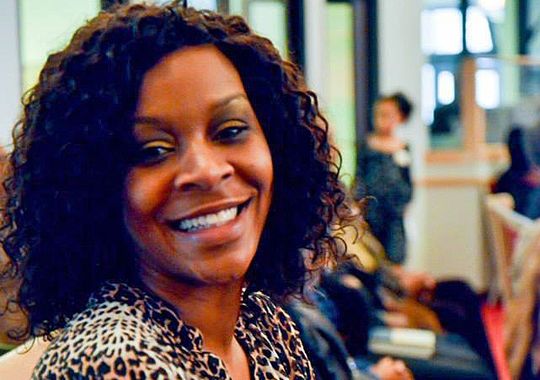
Sandra Bland was outspoken about the injustice that African-Americans often face. Footage from several of her inspirational videos where she would call on social change, have emerged. She would greet her viewers saying “Goodmorning my beautiful kings and queens”. She spoke with grace and calmness as she talked about injustice and the need for society as a whole to work towards social change, fairness and equality. She spoke with brilliance. Today, that brilliance, that beautiful queen is gone.

On July 10, in Waller County, Texas, Sandra Bland was stopped for changing lanes without any signalling and was later arrested on the allegation that she had assaulted an officer. Three days after her arrest, she was found dead in her cell room. Bland was 28 years old. Her death has been ruled a suicide. However, her family, the public and myself are not buying that. There is suspicion of foul play all around. In America, police has many times, been everything but a friend to African-Americans. Many unarmed black people because of their skin colour, have been shot dead by police officers. The stories of such murders are numerous and disturbing, so this particular story that Sandra Bland would have taken her own life is not one that will be easily embraced. More investigating is needed. Coupled with the fact of police brutality on black people in America, Sandra Bland was visibly full of life, full of hope for social change. As observable from her videos, she struck a presence of someone who was not quitting. She was in this life to win. So, we are really asking the police – what happened to Sandy Bland?

As many wait for more details to emerge, I feel so sad that an activist for racial equality and unity like Sandra Bland possibly went through the evils that she so wanted to work towards getting rid of. In several different videos that Sandy had recorded, she can be seen saying things like – “I was asked was I trying to racially unite or racially insight. My goal is to racially unite.”, “I’m going to call out racism wherever I see it.”, “for the ones who want to get on on my page talking about ‘all lives matter’, show me in American history where all lives have mattered. Where has there been liberty and justice for all?”.

Thank you Sandy for your service to humanity. I wish that you now sleep well in the place where there will always be beautiful mornings and where there is no more pain and injustice. God bless you.

Love & Peace,

Chiamaka

If you like this post, CLICK HERE to subscribe

Standard
Uncategorized

Diversity should mean more than meeting a quota

diversity-528x270

Photo obtained from http://www.rooshv.com

The challenge for every culturally and racially diverse society is the need to embrace all people within it. Indeed, this is the way diversity works. It is far more meaningful than the numbers, than meeting the quota. A truly multicultural or diverse society upholds an honest love for all people and their various cultures. Diversity is a beautiful thing and it only makes sense when it is done right.

While quite a number of countries are impressively diverse, this does not mean that they are very inclusive. Diversity encompasses different spheres – it is not just first acceptance or – your ability to enable migration to your country, your ability to provide social services for everyone regardless of where they came from or what they look like, your self-appraisal that you do not discriminate but accept all. A huge sphere of diversity that is often forgotten is the need to understand that everyone is just as significant – irregardless of whether they are called visible minorities or immigrants – and that their cultures are also important. Speaking from my own experience as an immigrant living in a Western society, I feel like there is an unconscious, constant persuasion for the the newcomers, the marginalized, to ‘assimilate’.

There are all these assumptions that – with all the bad news that comes from Nigeria, coupled with the Western media’s one-sided portrayal of Africa – coming to Canada must have been my ultimate redemption. I see how people with foreign or non-Canadian accents are treated and spoken of. There is pressure on the so-called other to dissolve into a melting pot. I have heard that there is no Canadian accent. While the sentiment of such a statement is appreciated, I do believe that honesty is the best policy.

In the United States, diversity blooms yet there is still so much racism. Unarmed black people are killed by law enforcement officials on the premise that the unarmed black person could somehow have been harmful, just because of his or her skin colour. Of what use then is diversity, if people are not free to be who they are?

Diversity to every society should mean more than using the faces of people of different skin colour on a billboard advertisement, more than boasting about the numbers of Asian, Black, White and Syrian people that reside together in a western society. It is beyond feeling blessed to be from a diverse society, it is beyond being accepting of more opportunities at diversity, it is beyond first-compassion for people who are seeking to migrate to flee war or poverty. These are all important but an ideal diverse society, must be one that also gives way to people to be who they are – to speak how they have always known to speak, to dress how they have always known to speak, to be proud of their skin not scared of what it may bring unto them. Diversity needs to be done right.

Love,

Chiamaka

If you like this post, CLICK HERE to subscribe

Standard
Uncategorized

Jungle justice: It’s time to end it

Jungle justice is a thing. It is certainly a thing in Nigeria and the recent xenophobic attacks in South Africa make one wonder the number of African countries in which jungle justice exists. The disturbing fact about jungle justice, in Nigeria is that it happens so often and there are little or no legal consequences.

In Nigeria, the most common method of carrying out jungle justice is to put a tire on a suspect’s neck, then pour kerosene or some inflammable fluid of that sort on the person and then light a match. The individual then burns alive, in the presence  of the perpetrators and onlookers and when the scenario is over, life goes on. Stating the word “suspect” is actually flawed because the person who is killed is not being seen or treated as a suspect but as a criminal. In a country with a Constitution and with laws, it is quite outraging that anyone can go on the streets and automatically take on the role of judge, jury and executioner. It certainly feels awkward referring to such acts with the word – justice, although it follows the word “jungle”. However, jungle justice is what such acts are indeed referred to.

Barbaric is the word for this sort of so-called justice. Anyone can be the victim. Innocent people could become victimized just based on an accusation. Imagine that some people are burnt to death over crimes which will certainly not demand an execution sentence at a court of law. So, why is jungle justice still a thing? Why are the perpetrators allowed to walk around as free people?

It is about time that Nigeria and other countries in which such acts of inhumane judgement are practised, enact laws that make  them (the acts) punishable. Jungle justice is unfair, callous and wicked – and this is not what justice is about. Justice is about due process – looking at the facts and asking thorough questions – before a verdict is made. It is time for a change and people need to be taught that such acts of inhumanity to a fellow person are intolerable and not in any way in conformity with being or becoming a just society.

Question: What are some other jungle justice practices that you have heard about and where did they occur? I would love to hear from you.

Peace,

Chiamaka

If you like this post, CLICK HERE to subscribe

Standard
Uncategorized

No place for fundamentalism in social justice advocacy

You live and learn. No one learns everything they need to know about life in a day. It is human nature to live, make mistakes, be ignorant and then learn, do better, still make mistakes and then, learn again. This is why the approach of imparting social justice knowledge through fundamentalism is not very helpful and often toxic and repelling.

It is important to recognize the fact that to come to knowledge, there is a process, there is no instancy. So, the approach of shaming everyone who does not necessarily agree with an ideology or a movement, in an effort to bring about social change does more harm than good. Of course, activists do not need to accommodate every idea or everyone and this is the powerful thing about activism. You defend people and societies assertively, in spite of insult, criticism and sometimes, possible harm. However, activists must be careful to make room to listen to those voices that want to know, that believe that there is good in what you are advocating for but need more enlightenment. This is so because some people do not just disagree with ideas because they are naive but because they do not have enough information, because they grew up within ideologies that are different from what should now be the norm.

The good news is that there are people willingly to learn why certain ideologies are putting societies backward. So, they need an open space where they can express their ‘ignorance’ politely and freely and then be more enlightened.

Do you ever read the works of certain social justice advocates and feel somewhat belittled, categorized unfairly as not willing to contribute to change? Well, no one should be made to feel that way. Social justice advocates have to be able to present themselves, their mandate, in a way that encourages people to come up and question them and even give constructive criticism. A simple example of fundamentalism is when an activist seems to respond to hate with hate, whether or not that was the intention. Also, think reverse racism – as a more narrow example.

It is very easy to be distracted by anger from all the bad news circulating form society to society, that activists begin to seem too angry and unapproachable. Speaking from my own experience, I have written and spoken out of anger at times, in ways that though my argument may have been right, I just may have scared off a few people with my facial expression or the tone of my voice – whether orally or in writing. Luckily, I have people who can tell me – I think you were right but that approach was unnecessarily too harsh.

Fundamentalism does not make people immediately drop their differing ideologies to follow yours, rather it takes them aback. The approach seems scary and certainly, they do not want to turn into people with temperaments, people who give no room to newcomers, the adapters. As my sister, Ebele, once told me and I am paraphrasing – A lot of troubles in the world are caused by fundamentalism.

So, it is problematic to approach social/world transformation through fundamentalism. It is like feeding fire with more fuel.

If you like this post, CLICK HERE to subscribe!!:)

Standard
Uncategorized

Broken systems and clipped wings

Broken systems exist in many societies and in my forms, whether it be systems that do not value racial and gender equality, systems that operate prison industrial complexes or whether it be systems that do not ameliorate the conditions of the poor. They are systems because the core of every society operates around a system – one run and implemented under a government. So, indeed governments can either produce or destroy a broken system because they control the system of governance.

Societies that operate under a broken system are unconsciously or consciously disadvantaged. This is because they are not maximizing the potential of most of the society- talents are left to rot in jail, the poor are left on the margins (having welfare packages in place does not necessarily empower people), racial discrimination etc. Broken systems turn endowed people into persons operating on clipped wings because they have the potential to succeed but there are systemic barriers holding them back.

ABC_kalief_browder_jt_150609_16x9_992

Kalief Browder (Photocredit: abc News) 

Kalief Browder, an American who recently committed suicide, was a victim of a broken system. He was arrested at age 16 in 2010, on the allegation that he had stolen a backpack – a crime he refuted to have been involved with. However, without a trial, he was jailed for three years and according to The New Yorker, Kalief was in in solitary confinement for two years. Browder was released from prison in the year 2013. During his time in prison, he became suicidal but none of his attempts at suicide were successful till June 6, 2015 – two years after he was released from prison. On that day in June, Kailef Browder hung himself and died. He was only 22. The story of Kalief Browder – from his imprisonment and till his death, is very chilling and indeed, angering because the circumstances that eventually led to his death could have been avoided. How can a 16-year-old child be imprisoned in solitary confinement? Why was there never a trial, no due process? Where was humanity in the law enforcement officials who had the ability to advocate for Browder’s rights?

That is what broken systems do. They clip wings, they do not enable people to fulfill their true potential, they hold people back from self-actualization.

Governments of developed and developing countries alike, need to create policies that ensure that all spheres of society are being represented justly and that empowerment is an underlying goal of most, if not all policies. Again, it is not enough to provide welfare services to the poor (though this is vital) and distribute food to the under-privileged during political campaigns. Rather, citizenry empowerment should be the goal of every government and the system of governance it operates within. Also, governments must make it a top objective to ensure that citizens’ rights are always a priority and ensure that only officials that align with such a mandate will retain their jobs. Who would imagine that a story like the Kalief Browder one would be coming out of a place like the United States?

Peace,

Chiamaka

If you like this post, CLICK HERE to subscribe!

Standard
Uncategorized

Forming in the present, shaping the future

History is of the past but not necessarily something that should be forgotten, unspoken of or left to wither away. History is the fabric of cultures and societies. It is accessible via story-telling, libraries, movies etc. History shapes the present and the future.

A week ago, together with some other social justice advocates, I was reflecting on the work of the Truth and Reconciliation Commission of Canada. I was thinking of ways that Canada could create a more respectful, just and inclusive society for the nation’s Aboriginal population who have long faced marginalization. In accordance with the theme of the conversation, I was asked what I thought reconciliation means with respect to Canada and Aboriginal peoples. So, I said: Reconciliation starts by recognizing the contributions that Aboriginal people have made to Canada and how there has also been a “cultural genocide” on Aboriginal peoples. In Canada, we do not talk about the issues. We talk about Canada being a multicultural and peaceful society but we do not talk about the issues. So, for reconciliation to happen – we must acknowledge the past, learn from it and develop ways to build a better present and future.

That is the summary of my contribution to the question asked. I also did allude to the fact that no matter how filthy the past has been, it has to be acknowledged and learned from not hidden. From articles I have read, conversations I have been engaged in, Aboriginal people in Canada want the racism that they and their ancestors have faced in the past to be recognized and they want a reconciliation. They want a better Canada that will not deny Aboriginal people of their human rights. To reconcile, Canadians have to see the issues in many treatments that were forcefully put upon Aboriginal people. Canadians have to see the issues with the past and realize that some actions of the present are merely but a less severe rendition of that past because Aboriginal people still live in disappointing economic and social conditions here in Canada.

I was born and raised in Nigeria but not until I left the country (for school) and certainly became more mature, did it begin to dawn on me that I did not know a lot about my history. Colonization swept away cultures and I ever since I realized that, I have made a conscious attempt to keep educating myself, to keep seeing value in what the colonizers may have deemed crude, to never cover up my identity, to never let anyone make me feel that my culture does not matter based on his/her ethnocentrism. History is shaping my strength, shaping my resistance and shaping my ability to encourage people from different cultures and nations, that they are good enough and their identity, accent and culture matters. If we dwell on imitation, we lose our identities and it becomes a loss to future generations.

History also gives people the ability to celebrate those who have shaped our present in a positive way – whether they are still living or no longer with us.

History forms from the present and is a vital reference for the future. Make a commitment to never let a part of your history (community, family history etc) die.

Love,

Chiamaka

If you like this post, CLICK HERE to subscribe!!:)

Standard
Uncategorized

Inequality on these streets

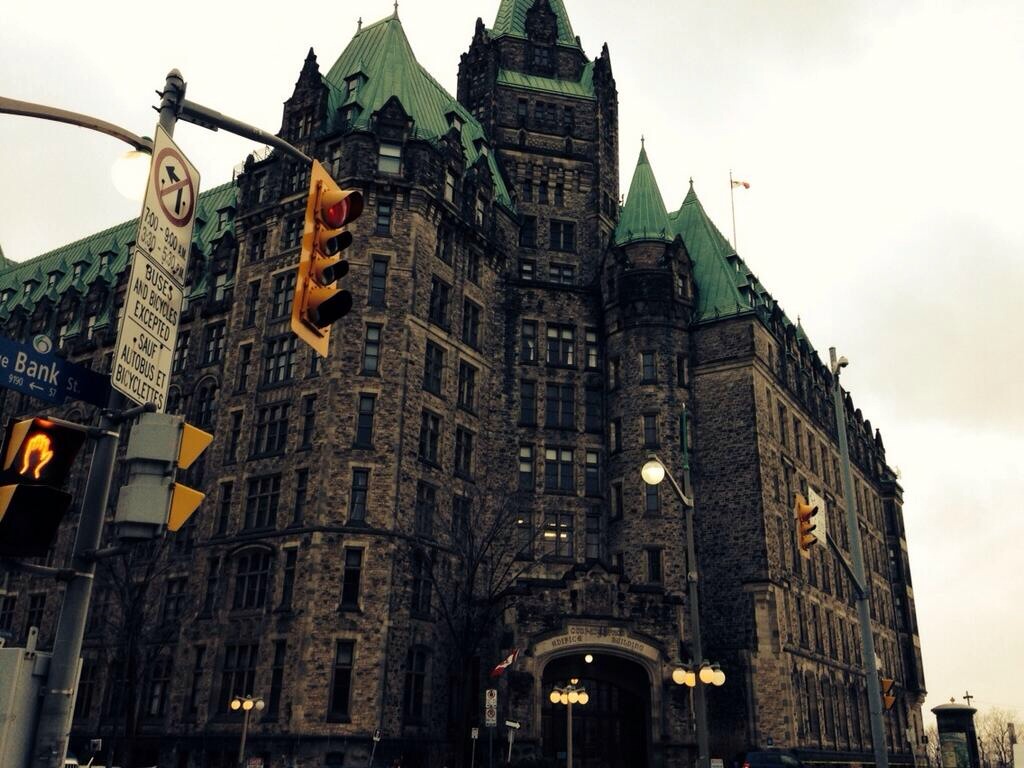
It is quite disturbing to notice the stark inequality that plays out between Rideau Street leading up to Parliament Hill. Observing the occurrences creates for me, a mental picture that perfectly depicts the rich who stay rich or keep getting richer versus the less fortunate who live in abject poverty. This picture is easily formed as you walk through Rideau street to Parliament Hill. If you walk on Rideau Street, you will journey through many needy citizens – some obviously under the influence of hard substance and some homeless, before you walk on further to Parliament Hill.

photo-9

This perfect picture of inequality (not the one above) is sad and unfortunate and the question that comes to mind is simply – Why?

Why is it that just across the road from the Hill where the people’s representatives debate and make laws, there is a street full of a people in desperate need for grace, for amelioration. Why?

Someone once told me that there had been an attempt to keep such under-privileged individuals away from the streets but then it seemed as though society was hiding it’s flaws and thus, not being honest. So, I guess that did not work out.

However, the dilemma here is not about hiding these people. No society is perfect and it is in accordance with democracy that flaws be made known, that representation of members of the society not be selective. The dilemma is in the sharp contrast between the occurrences on Rideau Street and those that take place on Parliament Hill, just walking distance away. This calls for concern as to what is being done to empower the vulnerable.

How is it that on one side of the road, there are people making thousands of dollars and on the other side, people are cheerful for just a two-dollar coin. The picture this paints is unimpressively perfect. It denotes the class struggle that is so commonly talked about across societies and which is possibly inevitably taught in political science classes. It is striking to the mind and shakes it. It spurs worry. I often wonder if the case with downtown Ottawa is as a result of the elected officials not doing enough … or then what? I find it hard to even accept the possibility that maybe ‘they’ just don’t really care. I may resist the urge to make that conclusion but this picture of inequality that comes to mind when I reminisce on my walks on Rideau Street and the surrounding area, begs for that particular conclusion to be the most attractive.

This picture is not an illusion. It is a reality. If you walk through Rideau Street, whether by day or by night, you will see a significant number of less fortunate people, some begging, some being loud, some just watching. Then, if you walk up to Parliament Hill, using Rideau Street as a sort of connection, the difference is clear. Still I ask – why? I do not know the answer to that but a suggestion to this predicament is the need for empowerment and engaging the less privileged in ways that will make them beneficial to themselves and to the society at large.

What are some inequality issues that you have observed in your own society? Please comment below.

Peace,

Chiamaka

If you like this post, CLICK HERE to subscribe!!:)

Standard