Uncategorized

No place for fundamentalism in social justice advocacy

You live and learn. No one learns everything they need to know about life in a day. It is human nature to live, make mistakes, be ignorant and then learn, do better, still make mistakes and then, learn again. This is why the approach of imparting social justice knowledge through fundamentalism is not very helpful and often toxic and repelling.

It is important to recognize the fact that to come to knowledge, there is a process, there is no instancy. So, the approach of shaming everyone who does not necessarily agree with an ideology or a movement, in an effort to bring about social change does more harm than good. Of course, activists do not need to accommodate every idea or everyone and this is the powerful thing about activism. You defend people and societies assertively, in spite of insult, criticism and sometimes, possible harm. However, activists must be careful to make room to listen to those voices that want to know, that believe that there is good in what you are advocating for but need more enlightenment. This is so because some people do not just disagree with ideas because they are naive but because they do not have enough information, because they grew up within ideologies that are different from what should now be the norm.

The good news is that there are people willingly to learn why certain ideologies are putting societies backward. So, they need an open space where they can express their ‘ignorance’ politely and freely and then be more enlightened.

Do you ever read the works of certain social justice advocates and feel somewhat belittled, categorized unfairly as not willing to contribute to change? Well, no one should be made to feel that way. Social justice advocates have to be able to present themselves, their mandate, in a way that encourages people to come up and question them and even give constructive criticism. A simple example of fundamentalism is when an activist seems to respond to hate with hate, whether or not that was the intention. Also, think reverse racism – as a more narrow example.

It is very easy to be distracted by anger from all the bad news circulating form society to society, that activists begin to seem too angry and unapproachable. Speaking from my own experience, I have written and spoken out of anger at times, in ways that though my argument may have been right, I just may have scared off a few people with my facial expression or the tone of my voice – whether orally or in writing. Luckily, I have people who can tell me – I think you were right but that approach was unnecessarily too harsh.

Fundamentalism does not make people immediately drop their differing ideologies to follow yours, rather it takes them aback. The approach seems scary and certainly, they do not want to turn into people with temperaments, people who give no room to newcomers, the adapters. As my sister, Ebele, once told me and I am paraphrasing – A lot of troubles in the world are caused by fundamentalism.

So, it is problematic to approach social/world transformation through fundamentalism. It is like feeding fire with more fuel.

If you like this post, CLICK HERE to subscribe!!:)

Standard
Uncategorized

Broken systems and clipped wings

Broken systems exist in many societies and in my forms, whether it be systems that do not value racial and gender equality, systems that operate prison industrial complexes or whether it be systems that do not ameliorate the conditions of the poor. They are systems because the core of every society operates around a system – one run and implemented under a government. So, indeed governments can either produce or destroy a broken system because they control the system of governance.

Societies that operate under a broken system are unconsciously or consciously disadvantaged. This is because they are not maximizing the potential of most of the society- talents are left to rot in jail, the poor are left on the margins (having welfare packages in place does not necessarily empower people), racial discrimination etc. Broken systems turn endowed people into persons operating on clipped wings because they have the potential to succeed but there are systemic barriers holding them back.

ABC_kalief_browder_jt_150609_16x9_992

Kalief Browder (Photocredit: abc News) 

Kalief Browder, an American who recently committed suicide, was a victim of a broken system. He was arrested at age 16 in 2010, on the allegation that he had stolen a backpack – a crime he refuted to have been involved with. However, without a trial, he was jailed for three years and according to The New Yorker, Kalief was in in solitary confinement for two years. Browder was released from prison in the year 2013. During his time in prison, he became suicidal but none of his attempts at suicide were successful till June 6, 2015 – two years after he was released from prison. On that day in June, Kailef Browder hung himself and died. He was only 22. The story of Kalief Browder – from his imprisonment and till his death, is very chilling and indeed, angering because the circumstances that eventually led to his death could have been avoided. How can a 16-year-old child be imprisoned in solitary confinement? Why was there never a trial, no due process? Where was humanity in the law enforcement officials who had the ability to advocate for Browder’s rights?

That is what broken systems do. They clip wings, they do not enable people to fulfill their true potential, they hold people back from self-actualization.

Governments of developed and developing countries alike, need to create policies that ensure that all spheres of society are being represented justly and that empowerment is an underlying goal of most, if not all policies. Again, it is not enough to provide welfare services to the poor (though this is vital) and distribute food to the under-privileged during political campaigns. Rather, citizenry empowerment should be the goal of every government and the system of governance it operates within. Also, governments must make it a top objective to ensure that citizens’ rights are always a priority and ensure that only officials that align with such a mandate will retain their jobs. Who would imagine that a story like the Kalief Browder one would be coming out of a place like the United States?

Peace,

Chiamaka

If you like this post, CLICK HERE to subscribe!

Standard
Uncategorized

Forming in the present, shaping the future

History is of the past but not necessarily something that should be forgotten, unspoken of or left to wither away. History is the fabric of cultures and societies. It is accessible via story-telling, libraries, movies etc. History shapes the present and the future.

A week ago, together with some other social justice advocates, I was reflecting on the work of the Truth and Reconciliation Commission of Canada. I was thinking of ways that Canada could create a more respectful, just and inclusive society for the nation’s Aboriginal population who have long faced marginalization. In accordance with the theme of the conversation, I was asked what I thought reconciliation means with respect to Canada and Aboriginal peoples. So, I said: Reconciliation starts by recognizing the contributions that Aboriginal people have made to Canada and how there has also been a “cultural genocide” on Aboriginal peoples. In Canada, we do not talk about the issues. We talk about Canada being a multicultural and peaceful society but we do not talk about the issues. So, for reconciliation to happen – we must acknowledge the past, learn from it and develop ways to build a better present and future.

That is the summary of my contribution to the question asked. I also did allude to the fact that no matter how filthy the past has been, it has to be acknowledged and learned from not hidden. From articles I have read, conversations I have been engaged in, Aboriginal people in Canada want the racism that they and their ancestors have faced in the past to be recognized and they want a reconciliation. They want a better Canada that will not deny Aboriginal people of their human rights. To reconcile, Canadians have to see the issues in many treatments that were forcefully put upon Aboriginal people. Canadians have to see the issues with the past and realize that some actions of the present are merely but a less severe rendition of that past because Aboriginal people still live in disappointing economic and social conditions here in Canada.

I was born and raised in Nigeria but not until I left the country (for school) and certainly became more mature, did it begin to dawn on me that I did not know a lot about my history. Colonization swept away cultures and I ever since I realized that, I have made a conscious attempt to keep educating myself, to keep seeing value in what the colonizers may have deemed crude, to never cover up my identity, to never let anyone make me feel that my culture does not matter based on his/her ethnocentrism. History is shaping my strength, shaping my resistance and shaping my ability to encourage people from different cultures and nations, that they are good enough and their identity, accent and culture matters. If we dwell on imitation, we lose our identities and it becomes a loss to future generations.

History also gives people the ability to celebrate those who have shaped our present in a positive way – whether they are still living or no longer with us.

History forms from the present and is a vital reference for the future. Make a commitment to never let a part of your history (community, family history etc) die.

Love,

Chiamaka

If you like this post, CLICK HERE to subscribe!!:)

Standard
Uncategorized

Inequality on these streets

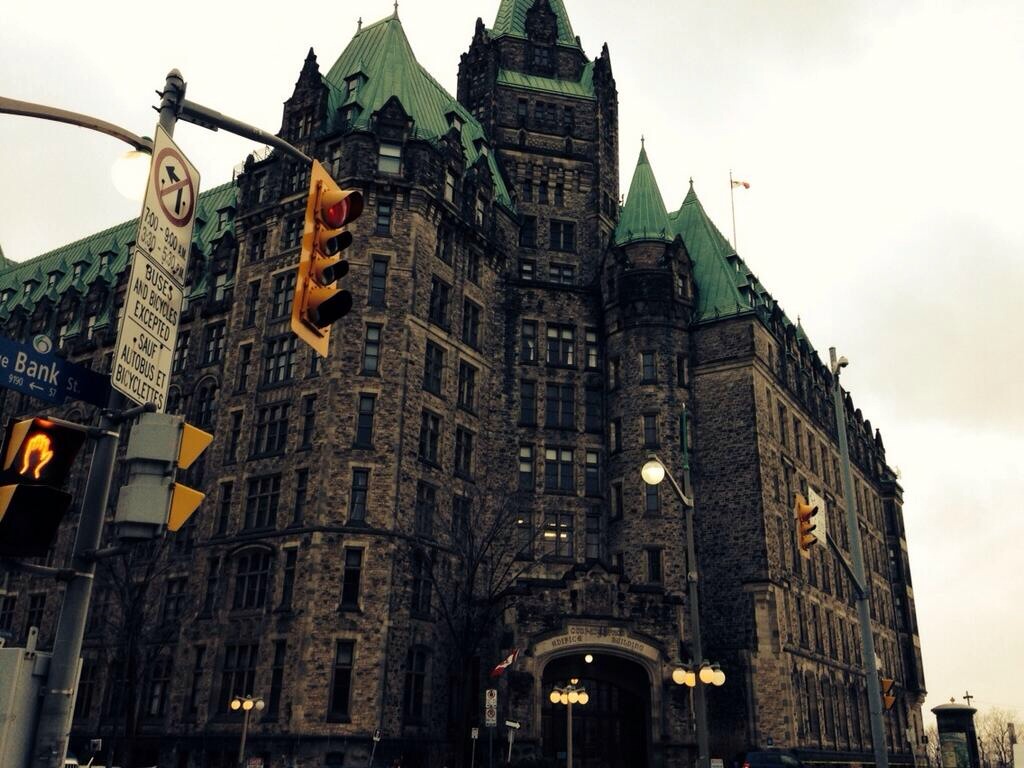
It is quite disturbing to notice the stark inequality that plays out between Rideau Street leading up to Parliament Hill. Observing the occurrences creates for me, a mental picture that perfectly depicts the rich who stay rich or keep getting richer versus the less fortunate who live in abject poverty. This picture is easily formed as you walk through Rideau street to Parliament Hill. If you walk on Rideau Street, you will journey through many needy citizens – some obviously under the influence of hard substance and some homeless, before you walk on further to Parliament Hill.

photo-9

This perfect picture of inequality (not the one above) is sad and unfortunate and the question that comes to mind is simply – Why?

Why is it that just across the road from the Hill where the people’s representatives debate and make laws, there is a street full of a people in desperate need for grace, for amelioration. Why?

Someone once told me that there had been an attempt to keep such under-privileged individuals away from the streets but then it seemed as though society was hiding it’s flaws and thus, not being honest. So, I guess that did not work out.

However, the dilemma here is not about hiding these people. No society is perfect and it is in accordance with democracy that flaws be made known, that representation of members of the society not be selective. The dilemma is in the sharp contrast between the occurrences on Rideau Street and those that take place on Parliament Hill, just walking distance away. This calls for concern as to what is being done to empower the vulnerable.

How is it that on one side of the road, there are people making thousands of dollars and on the other side, people are cheerful for just a two-dollar coin. The picture this paints is unimpressively perfect. It denotes the class struggle that is so commonly talked about across societies and which is possibly inevitably taught in political science classes. It is striking to the mind and shakes it. It spurs worry. I often wonder if the case with downtown Ottawa is as a result of the elected officials not doing enough … or then what? I find it hard to even accept the possibility that maybe ‘they’ just don’t really care. I may resist the urge to make that conclusion but this picture of inequality that comes to mind when I reminisce on my walks on Rideau Street and the surrounding area, begs for that particular conclusion to be the most attractive.

This picture is not an illusion. It is a reality. If you walk through Rideau Street, whether by day or by night, you will see a significant number of less fortunate people, some begging, some being loud, some just watching. Then, if you walk up to Parliament Hill, using Rideau Street as a sort of connection, the difference is clear. Still I ask – why? I do not know the answer to that but a suggestion to this predicament is the need for empowerment and engaging the less privileged in ways that will make them beneficial to themselves and to the society at large.

What are some inequality issues that you have observed in your own society? Please comment below.

Peace,

Chiamaka

If you like this post, CLICK HERE to subscribe!!:)

Standard
Uncategorized

Converging for social change: Is everyone following?

The world is drastically changing and societies are converging. People are learning more about different societies, a lot of ignorance is fading away, people are getting more informed – and this is good for social change.

The modern convergence of societies which boosts social change is operating rapidly and is not only as a result of the media but also because of social actors – community activists, politicians, entrepreneurs and other contributing members of the public – who are willing to lend their voices on platforms that will reach across societies. In recent years, you and I have seen a world where you do not have to be from a particular nation before you can speak up on the issues being faced by the locals of that nation. In this day and age, Canadians can speak up for any suffering Jamaicans, the Polish can speak up for any suffering Canadians – these are just examples. Again, the world is converging and this is good for social change. The question is: How can people make the best out of this benefit?

A major way is by staying informed. People need to read newspapers, watch the news and constantly engage with others. Sometimes, wish yourself strength and look through the words under a bitter caption. If you do not read, if you do not watch, if you do not listen – it is almost impossible to make social change. Those activities take you outside of your own reasoning and you can grasp the reality of a people and what the understanding of others about that situation is. This is dialoguing. When you turn on the news, you are dialoguing. Same thing goes for when you are speaking with a group of social actors who have organized for action or change.

When you dialogue, you are able to understand issues better and most importantly, you realize why there is much ado about a particular issue. Dialoguing helps to cast away – personal stereotypical beliefs, lack of interest and channel vulnerability in the right direction.

You may sometimes fail to see the issue in an issue because of a stereotype that you do not acknowledge. For instance, when a Black person gets wrongfully shot in America, there are those who sympathize and there are those who try to find reason to castigate the deceased. Reason that is backed up with stereotypes, while such persons fail to question why an unarmed person will be shot as though he/she were armed. Everyone has a stereotype but it does not have to be permanent. When you dialogue including having constructive arguments with people, your stereotypes begin to come clear and only when you have acknowledged them can you then work towards change.

To alleviate social problems, the attention of many needs to be garnered and this is why the media (when they do not misinform), social media, organizations for social change are appreciated and continuously needed. They raise awareness on issues, frame and deliver information about these issues in a way that spurs interest. Allow yourself to give in. Allow yourself to care, allow your conscience to stay activated.

It is human nature to be vulnerable and this can be a virtue when it awakens compassion in people. Social issues test vulnerability and you may just want to change the channel or throw away that newspaper. However, you must first feel before you can take strides.

Stay informed and do not stop having an open-minded approach towards caring for the issues of people and societies.

Love,

Chiamaka

If you like this post, CLICK HERE to subscribe!!:)

Standard
Uncategorized

Compassion and Conscience

The highlight of my week was possibly a video (click here) of Ben Murray-Bruce which I first came across on Facebook. For those of you who are not familiar with him, Murray-Bruce is a Nigerian businessman, Chairman of the Silverbird group and as I have just recently learnt – a Senator-elect.

The speech was made at the Silverbird Man of the Year event in the year, 2014 and Bruce was speaking on the state of the economy and on how some who lead Nigeria are driven by their own gain and ignore the sufferings of many. It was a very audacious speech and it was brave of Murray-Bruce to speak his truths on corruption and the dubious ways of life of some Nigerian politicians – in front of politicians. It was a mixed crowd though, not only politicians were in attendance. Statements from that speech kept resounding in my mind for days and yes, I watched the video over and over again.

The key words that I got out of that speech were – conscience and compassion. Ben Murray-Bruce’s speech reminded me that many ills that are occurring in this world are the results of silencing the feelings of conscience and compassion. The speech reiterated the fact that when you act on conscience and compassion, you can make positive change. Our humanity begs that we feel, whether it be love or hurt. It begs that we have a conscience, that we do not deprive ourselves of human nature by suppressing one feeling for the other.

It is not enough to be so positive about life that you fail to acknowledge your pain or even other’s pain, to turn off the news once it’s no longer making you laugh. It’s okay to turn off the news if the bad news is too much for a day but it’s not okay to not dare to care and empathize with others. On the other hand, life should not be lived as though it were a nightmare. Don’t deliberate on sorrow, hurt or a constant expectation of the worst. If we surround ourselves with hurt, how then can we love, how then can we make a change? Faith moves mountains.

It is compassion and a conscience that move people to donate to victims of a natural disaster, to speak up for victims of racial injustice, to lend aid to the poor, to give food and offer love to the homeless. It is in an attempt to silence the throbbing of compassion and conscience that people deny others of happiness, peace, fairness, wealth and justice

I choose to feel. I choose compassion and I choose to listen to my conscience.

Love & peace,

Chiamaka

If you like this post, CLICK HERE to subscribe!!:)

Standard
Uncategorized

Lessons from social enterprises: why these businesses stay relevant

You have to give it to social entrepreneurs though! These individuals see a need in their community and try to create new systems that can ameliorate or replace broken ones. For social entrepreneurs, the aim is not just to make profit for self but there is a collectivist approach to doing business, in the sense that the aim is to benefit oneself and the external community at large.

The fascinating thing about the nature of social entrepreneurs is that they are big-time innovators who try to steer away from the norm. They do not just want to follow a path that has long been constructed and riden on but rather, they may follow it with their own rules for inducing community development. These people are not just about the money, they are not just about investing in the interest of feeding their bellies and beautifying their bank accounts. They tackle and consider business and investment opportunities from the angle of societal interest – what is in the best interest of society.

Social entrepreneurs approach entrepreneurship from a conscious angle. They care about the non-investors, the non-shareholders, the non-customers, the less privileged and in some cases, environmental sustainability. Social entrepreneurs are concerned with having spill-over business effects that will enrich society. If you ever dig into the details of some social enterprises, it is noticeable that they are trying to create something new, something unique and something beneficial to the society. These entrepreneurs shed light on social issues and through their own medium, implement new ways of curbing such occurrences.

I feel inspired to come from a family of social entrepreneurs. Daddy and my elder sister came up with the business idea of producing Ebys Tea Africana through natural raw materials, as a response to the need for organic and healthy refreshments in Nigeria. It thrills me whenever I am told that people formerly suffering from illness found relief after drinking the tea. My father and my sister saw a need, worked through a long process of implementing it and they are rapidly saving lives in our country, Nigeria. Also, recently, I have been inspired by another social enterprise called Enactus.

There is a lot to learn from social entrepreneurs. The highlight about these entrepreneurs may be their consciousness that reaches beyond the organization to the marginalized, the poor, the oppressed and even this rare, beautiful planet in which we find ourselves – Earth (we must sustain it).

If you like this post, CLICK HERE to subscribe!!:)

Standard
Uncategorized

Baltimore 2015: A pained people, failed institutions and a biased media

Baltimore is trending. It is trending not only because a black man died due to police negligence, not only because of the violence that erupted in the past few days but also because of the way that the American media has chosen to frame the occurrences in Baltimore.

It is a factual conception that the Western media is racist and it has played out again with regards to the protests and uprisings that have occurred in Baltimore, in reaction to the death of Freddie Gray. To be specific, the American media is at it again perpetuating its usually victim-blaming when it comes to blacks. There were peaceful protests going on in Baltimore and those were not being well-documented, save for a few media outlets and a social media outlet like Twitter. The reputable, long-lived media institutions have taken preference to covering news on the looting, the police attacks, vehicle burning and riots. The internet has been lit up with headlines about violent eruptions in Baltimore, the mum who smacked her son away from the protest (what pretty much any mother would do in good faith) is now being dubbed ‘mom of the year’, a ‘hero mum’ and is fiercely becoming the star in all this uproar, while the pain of the marginalized is again being toyed with.

Definitely, violence is not what one should wish for in response to any form of injustice. It is disappointing to hear about all the destruction and looting that went on in Baltimore. Such actions are in no way an honour to the late Freddie Gray and it is proper and best that those engaging in violence take to peaceful protesting. However, to stop at that will be naive, for the dehumanization of blacks in America has been well-recorded and it is not a history, as in this so-called civilized century, to be black and poor is lethal.

The very ones that should protect the public are killing black people, state institutions are failing black people in America. How much can a mere mortal handle before patience turns into panting and a morale of ‘non-violence’ turns into a dislike for that very word? The American media is not being fair and this is too unfortunate. The media should be a catalyst for change – a voice for the voiceless, the oppressed and the marginalized. However, what we see in the case of the US media is a continuous cycle of victim-blaming, race-shaming and casting the oppressed as the masters of their own suffering. By going contrary to ensuring public justice, the American media is furthering the issues because some privileged persons buy into such conceptions of black people as warriors and trouble-makers. Now, how is this sort of a conception going to change the big issue of racially-motivated oppression that has characterized the US for centuries? Rhetorical question for some but worth the ponder for many.

Hoping for justice for Freddie Gray, healing for the hurt, an awakening of conscience for the American media and peace in Baltimore.

Peace,

Chiamaka

If you like this post, CLICK HERE to subscribe

Standard
Uncategorized

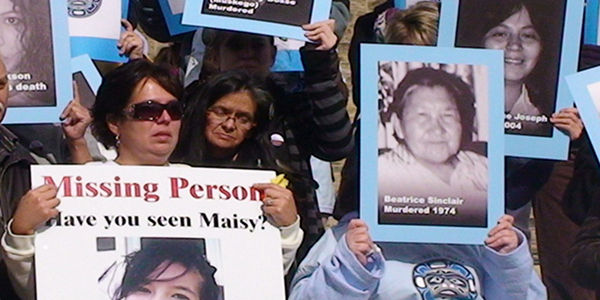
How many Stolen Sisters?

641960-1412350076-wide

Photo retrieved from: http://www.thepetitionsite.com/takeaction/641/960/179/

A year ago, the Royal Canadian Mounted Police (RCMP) released a report which states that between 1980 and 2012, there had been 1181 missing and murdered Aboriginal women. According to the report, a striking majority (1017) of the women in that category were murdered. The numbers continue to rise. Last year, 15 year old Tina Fontaine’s body was found in the Red River. The body had been wrapped in a plastic bag before it was dumped. In November of that same year (2014), Rinelle Harper was sexually assaulted, beaten and dumped in the Assiniboine River. Harper survived.

The indignity in the way Indigenous women in Canada are treated did not start just recently. Colonization was the genesis of these atrocities. Indigenous people were the first on Canadian soil but they began to face marginalization, violence and colonization when European settlers started to emerge. Indigenous women were seen to be of little or no worth, they were sexually assaulted and used for labour. Patriachy was infused into the Indigenous culture as a result of the Christian, European homogenization of the society that was taking place at that time of colonization in Canada. There was the establishment of the residential school system by the government in the 19th century, in an attempt to cleanse Aboriginal children of their culture and enable them assimilate into the mainstream culture. Children were forcefully taken to residential schools where they were not allowed to speak their language and lots of sexual, physical and emotional abuse went on in these schools. The residential school system ended in 1996 – not a long time ago.

That little summary of the impacts that colonization in Canada has had on Indigenous peoples gives an insight to why Indigenous women are treated with so much disrespect and inhumanity. There is a history. A history that deemed Indigenous peoples as uncivilized, a history that dumped patriarchy into their culture (this may also explain why many Indigenous women experience spousal abuse), a history that isolated children from their families into an educational system of abuse – a psychological cycle that may be passed to generations. Indigenous women till this day are at the receiving end of all these so-called ‘past’ misconceptions and mistreatment of Indigenous persons.

I have been in the middle on conversations on Aboriginal issues where someone will chip in and state sympathetically that their culture is the main issue. So you see, the effects of colonization can stick like hard glue. The culture of Indigenous people is not the problem and it is unfair to say so. Rather, the problem is that Natives have long been forced to assimilate into the dominant culture and their commitment to the culture of their ancestors has resulted in dire consequences such as the susceptibility of the women to sexual assault and murder.

The eye-opening RCMP report which was mentioned earlier, focused on the year 1980 through to 2012. Before 1980, such issues were already taking place. In 1971, Helen Betty Osborne was sexually assaulted and murdered for refusing to follow a group of men to party. In 2014, there were the cases of Fontaine and Harper. So Canada, how many more Stolen Sisters before we get our act together? How many more Stolen Sisters before the government of the day takes action to reduce the proneness of Indigenous women to violence?

Peace,

Chiamaka

If you like this post, CLICK HERE to subscribe

Standard
Uncategorized

Interview with Jamie Kwong – Director at the ORCC and business leader

photo-6

Photo Credit: Claude Brazeau, MPA www.brazeauphoto.com

Born in Brampton, Ontario, Jamie Kwong moved to Ottawa 11 years ago and has taken the city by storm. She is a director with the Ottawa Rape Crisis Centre (ORCC). Kwong is the executive director of the Quartier Vanier business improvement association (BIA). She was formerly the executive director of the Orléans Chamber of Commerce. Jamie Kwong is a great fit for the mandates of this blog because as you will notice from the interview, she is passionate about social justice and using enterprise as a means to give back to the community. On April 12, I sat down with Kwong for an interview and she shared lots from her wealth of experience:

On her attractiveness for the business positions that she has headed 

Prior to that, I was at the sexual assault centre (SASC) doing their fundraising and some support work. I was there for a couple of years as a volunteer. I started doing more events there and then, connecting with local city politicians and I kind of realized that’s what I really like to do and make change at that city level. I like to promote really amazing things in Ottawa and so, an opportunity became available at the Orléans Chamber of Commerce. I knew no one there, I didn’t even know what the Chamber of Commerce did. I applied, I got the job, I moved and I met a whole host of people. 120,000 people in that community itself. In my work there, I got to work with small business owners and I also worked with city politicians, provincial politicians and federal (politicians). You really start to see the synergy between the importance of supporting your local business community – they are the ones that donate back to charities, they are the ones that donate back to various initiatives in the community and they also make use of those things in the community. So, its very cyclical and it’s a symbiotic relationship. I really fell in love with that community. After 3 years, I’m like – I want to try something different, I want to try more advocacy – so promoting what would be beneficial for that community and that could be anything from promoting transportation needs we need, to bringing in types of businesses that would help make our community more diverse. I signed a lease for an apartment in New Edinburgh and the job for Quartier Vanier came up. It’s more streamlined, so focusing on making three streets really attractive – Beechwood, Montreal Road, McAurthur.

On her sexual violence support work

The last year and a half, I have been volunteering at the Ottawa Rape Crisis Centre (ORCC), so there is a lot of overlap between the sexual assault centre and the Ottawa Rape Crisis Centre. It (the Ottawa Rape Crisis Centre) is the third sexual assault centre that opened in Canada, so they just celebrated their 40th anniversary. For the last six years, I have been working in violence against women, I meet amazing people and it’s funny, people have interesting misperceptions on the work and even of rape culture, in general and myth that I love to raise awareness on it. When I was working as a support worker, I met people that had gone through some of the most horrific things you can hear of and they are sitting in front of you, they are full of love, full of compassion, they wanna help people, they wanna just be heard and believed and supported.

Describing Ottawa with regards to sexual violence 

Ottawa, in general, is a safe city. One statistic that I want to get out there is that Ottawa is known as the city that is safest for women. Anecdotally and through our own statistics and I am not going to even say that I am an expert on stats, but sexual violence is still a major issue here. What stops women from feeling safe to come forward and reporting is sometimes, they’re put on the position of defending themselves. We also have other things that we are looking into at the ORCC – what kind of things can we do as sexual assault centres and the police to make it easier for women to report. So, I know that there are some initiatives that are coming forward. We are trying to push forward on models that other cities have used, that have been very effective in getting more women to report. One is the Philadelphia model thats built into their system, where the police work hand-in-hand with front-line workers. Women feel much safer coming forward.

There is a conception that women are not easily believed when they report rape. Thoughts?

In my work as a support worker at SASC, I found that the number one thing is that people do not automatically see why they need to report and nor is it any woman’s responsibility. They need to take care of themselves, so they need to do what’s best for themselves. So, often times, people are like, “Oh you should report”. Women make the best decisions for what they need and so, the most dangerous time for women is when they are living in abusive situations. So, they know these things. Sometimes, they need to take it step-by-step, according to what they feel they need. Often times, if they report right away, that is the very very last case kind of situation. We get a lot of women who waited 20 years – had their children grow up or other things factored in and then, finally get time to themselves. 20 years later, all this stuff is coming is coming up. It’s called triggers.
Advice for anyone who has been a victim of rape and is wondering – “What do I do?” 
There’s a lot of victim blaming out there. What I would say to anyone who has experienced it is – It wasn’t your fault, what do you need right now – ask yourself that. Here are some three resources that might be of help to you: CALACS (for Francophones), SASC and then there’s ORCC.

You can contact Jamie Kwong via Twitter, LinkedIn and/or Facebook! Also, check out this upcoming fundraising event, for the ORCC: http://www.orcc.net/orcc-4th-annual-spin-thon

If you like this post, CLICK HERE to subscribe!! 🙂

Standard