Uncategorized

Converging for social change: Is everyone following?

The world is drastically changing and societies are converging. People are learning more about different societies, a lot of ignorance is fading away, people are getting more informed – and this is good for social change.

The modern convergence of societies which boosts social change is operating rapidly and is not only as a result of the media but also because of social actors – community activists, politicians, entrepreneurs and other contributing members of the public – who are willing to lend their voices on platforms that will reach across societies. In recent years, you and I have seen a world where you do not have to be from a particular nation before you can speak up on the issues being faced by the locals of that nation. In this day and age, Canadians can speak up for any suffering Jamaicans, the Polish can speak up for any suffering Canadians – these are just examples. Again, the world is converging and this is good for social change. The question is: How can people make the best out of this benefit?

A major way is by staying informed. People need to read newspapers, watch the news and constantly engage with others. Sometimes, wish yourself strength and look through the words under a bitter caption. If you do not read, if you do not watch, if you do not listen – it is almost impossible to make social change. Those activities take you outside of your own reasoning and you can grasp the reality of a people and what the understanding of others about that situation is. This is dialoguing. When you turn on the news, you are dialoguing. Same thing goes for when you are speaking with a group of social actors who have organized for action or change.

When you dialogue, you are able to understand issues better and most importantly, you realize why there is much ado about a particular issue. Dialoguing helps to cast away – personal stereotypical beliefs, lack of interest and channel vulnerability in the right direction.

You may sometimes fail to see the issue in an issue because of a stereotype that you do not acknowledge. For instance, when a Black person gets wrongfully shot in America, there are those who sympathize and there are those who try to find reason to castigate the deceased. Reason that is backed up with stereotypes, while such persons fail to question why an unarmed person will be shot as though he/she were armed. Everyone has a stereotype but it does not have to be permanent. When you dialogue including having constructive arguments with people, your stereotypes begin to come clear and only when you have acknowledged them can you then work towards change.

To alleviate social problems, the attention of many needs to be garnered and this is why the media (when they do not misinform), social media, organizations for social change are appreciated and continuously needed. They raise awareness on issues, frame and deliver information about these issues in a way that spurs interest. Allow yourself to give in. Allow yourself to care, allow your conscience to stay activated.

It is human nature to be vulnerable and this can be a virtue when it awakens compassion in people. Social issues test vulnerability and you may just want to change the channel or throw away that newspaper. However, you must first feel before you can take strides.

Stay informed and do not stop having an open-minded approach towards caring for the issues of people and societies.

Love,

Chiamaka
If you like this post, CLICK HERE to subscribe!!:)

Standard
Uncategorized

Compassion and Conscience

The highlight of my week was possibly a video (click here) of Ben Murray-Bruce which I first came across on Facebook. For those of you who are not familiar with him, Murray-Bruce is a Nigerian businessman, Chairman of the Silverbird group and as I have just recently learnt – a Senator-elect.

The speech was made at the Silverbird Man of the Year event in the year, 2014 and Bruce was speaking on the state of the economy and on how some who lead Nigeria are driven by their own gain and ignore the sufferings of many. It was a very audacious speech and it was brave of Murray-Bruce to speak his truths on corruption and the dubious ways of life of some Nigerian politicians – in front of politicians. It was a mixed crowd though, not only politicians were in attendance. Statements from that speech kept resounding in my mind for days and yes, I watched the video over and over again.

The key words that I got out of that speech were – conscience and compassion. Ben Murray-Bruce’s speech reminded me that many ills that are occurring in this world are the results of silencing the feelings of conscience and compassion. The speech reiterated the fact that when you act on conscience and compassion, you can make positive change. Our humanity begs that we feel, whether it be love or hurt. It begs that we have a conscience, that we do not deprive ourselves of human nature by suppressing one feeling for the other.

It is not enough to be so positive about life that you fail to acknowledge your pain or even other’s pain, to turn off the news once it’s no longer making you laugh. It’s okay to turn off the news if the bad news is too much for a day but it’s not okay to not dare to care and empathize with others. On the other hand, life should not be lived as though it were a nightmare. Don’t deliberate on sorrow, hurt or a constant expectation of the worst. If we surround ourselves with hurt, how then can we love, how then can we make a change? Faith moves mountains.

It is compassion and a conscience that move people to donate to victims of a natural disaster, to speak up for victims of racial injustice, to lend aid to the poor, to give food and offer love to the homeless. It is in an attempt to silence the throbbing of compassion and conscience that people deny others of happiness, peace, fairness, wealth and justice

I choose to feel. I choose compassion and I choose to listen to my conscience.

Love & peace,

Chiamaka

If you like this post, CLICK HERE to subscribe!!:)

Standard
Uncategorized

Lessons from social enterprises: why these businesses stay relevant

You have to give it to social entrepreneurs though! These individuals see a need in their community and try to create new systems that can ameliorate or replace broken ones. For social entrepreneurs, the aim is not just to make profit for self but there is a collectivist approach to doing business, in the sense that the aim is to benefit oneself and the external community at large.

The fascinating thing about the nature of social entrepreneurs is that they are big-time innovators who try to steer away from the norm. They do not just want to follow a path that has long been constructed and riden on but rather, they may follow it with their own rules for inducing community development. These people are not just about the money, they are not just about investing in the interest of feeding their bellies and beautifying their bank accounts. They tackle and consider business and investment opportunities from the angle of societal interest – what is in the best interest of society.

Social entrepreneurs approach entrepreneurship from a conscious angle. They care about the non-investors, the non-shareholders, the non-customers, the less privileged and in some cases, environmental sustainability. Social entrepreneurs are concerned with having spill-over business effects that will enrich society. If you ever dig into the details of some social enterprises, it is noticeable that they are trying to create something new, something unique and something beneficial to the society. These entrepreneurs shed light on social issues and through their own medium, implement new ways of curbing such occurrences.

I feel inspired to come from a family of social entrepreneurs. Daddy and my elder sister came up with the business idea of producing Ebys Tea Africana through natural raw materials, as a response to the need for organic and healthy refreshments in Nigeria. It thrills me whenever I am told that people formerly suffering from illness found relief after drinking the tea. My father and my sister saw a need, worked through a long process of implementing it and they are rapidly saving lives in our country, Nigeria. Also, recently, I have been inspired by another social enterprise called Enactus.

There is a lot to learn from social entrepreneurs. The highlight about these entrepreneurs may be their consciousness that reaches beyond the organization to the marginalized, the poor, the oppressed and even this rare, beautiful planet in which we find ourselves – Earth (we must sustain it).

If you like this post, CLICK HERE to subscribe!!:)

Standard
Uncategorized

Baltimore 2015: A pained people, failed institutions and a biased media

Baltimore is trending. It is trending not only because a black man died due to police negligence, not only because of the violence that erupted in the past few days but also because of the way that the American media has chosen to frame the occurrences in Baltimore.

It is a factual conception that the Western media is racist and it has played out again with regards to the protests and uprisings that have occurred in Baltimore, in reaction to the death of Freddie Gray. To be specific, the American media is at it again perpetuating its usually victim-blaming when it comes to blacks. There were peaceful protests going on in Baltimore and those were not being well-documented, save for a few media outlets and a social media outlet like Twitter. The reputable, long-lived media institutions have taken preference to covering news on the looting, the police attacks, vehicle burning and riots. The internet has been lit up with headlines about violent eruptions in Baltimore, the mum who smacked her son away from the protest (what pretty much any mother would do in good faith) is now being dubbed ‘mom of the year’, a ‘hero mum’ and is fiercely becoming the star in all this uproar, while the pain of the marginalized is again being toyed with.

Definitely, violence is not what one should wish for in response to any form of injustice. It is disappointing to hear about all the destruction and looting that went on in Baltimore. Such actions are in no way an honour to the late Freddie Gray and it is proper and best that those engaging in violence take to peaceful protesting. However, to stop at that will be naive, for the dehumanization of blacks in America has been well-recorded and it is not a history, as in this so-called civilized century, to be black and poor is lethal.

The very ones that should protect the public are killing black people, state institutions are failing black people in America. How much can a mere mortal handle before patience turns into panting and a morale of ‘non-violence’ turns into a dislike for that very word? The American media is not being fair and this is too unfortunate. The media should be a catalyst for change – a voice for the voiceless, the oppressed and the marginalized. However, what we see in the case of the US media is a continuous cycle of victim-blaming, race-shaming and casting the oppressed as the masters of their own suffering. By going contrary to ensuring public justice, the American media is furthering the issues because some privileged persons buy into such conceptions of black people as warriors and trouble-makers. Now, how is this sort of a conception going to change the big issue of racially-motivated oppression that has characterized the US for centuries? Rhetorical question for some but worth the ponder for many.

Hoping for justice for Freddie Gray, healing for the hurt, an awakening of conscience for the American media and peace in Baltimore.

Peace,

Chiamaka

If you like this post, CLICK HERE to subscribe

Standard
Uncategorized

How many Stolen Sisters?

641960-1412350076-wide

Photo retrieved from: http://www.thepetitionsite.com/takeaction/641/960/179/

A year ago, the Royal Canadian Mounted Police (RCMP) released a report which states that between 1980 and 2012, there had been 1181 missing and murdered Aboriginal women. According to the report, a striking majority (1017) of the women in that category were murdered. The numbers continue to rise. Last year, 15 year old Tina Fontaine’s body was found in the Red River. The body had been wrapped in a plastic bag before it was dumped. In November of that same year (2014), Rinelle Harper was sexually assaulted, beaten and dumped in the Assiniboine River. Harper survived.

The indignity in the way Indigenous women in Canada are treated did not start just recently. Colonization was the genesis of these atrocities. Indigenous people were the first on Canadian soil but they began to face marginalization, violence and colonization when European settlers started to emerge. Indigenous women were seen to be of little or no worth, they were sexually assaulted and used for labour. Patriachy was infused into the Indigenous culture as a result of the Christian, European homogenization of the society that was taking place at that time of colonization in Canada. There was the establishment of the residential school system by the government in the 19th century, in an attempt to cleanse Aboriginal children of their culture and enable them assimilate into the mainstream culture. Children were forcefully taken to residential schools where they were not allowed to speak their language and lots of sexual, physical and emotional abuse went on in these schools. The residential school system ended in 1996 – not a long time ago.

That little summary of the impacts that colonization in Canada has had on Indigenous peoples gives an insight to why Indigenous women are treated with so much disrespect and inhumanity. There is a history. A history that deemed Indigenous peoples as uncivilized, a history that dumped patriarchy into their culture (this may also explain why many Indigenous women experience spousal abuse), a history that isolated children from their families into an educational system of abuse – a psychological cycle that may be passed to generations. Indigenous women till this day are at the receiving end of all these so-called ‘past’ misconceptions and mistreatment of Indigenous persons.

I have been in the middle on conversations on Aboriginal issues where someone will chip in and state sympathetically that their culture is the main issue. So you see, the effects of colonization can stick like hard glue. The culture of Indigenous people is not the problem and it is unfair to say so. Rather, the problem is that Natives have long been forced to assimilate into the dominant culture and their commitment to the culture of their ancestors has resulted in dire consequences such as the susceptibility of the women to sexual assault and murder.

The eye-opening RCMP report which was mentioned earlier, focused on the year 1980 through to 2012. Before 1980, such issues were already taking place. In 1971, Helen Betty Osborne was sexually assaulted and murdered for refusing to follow a group of men to party. In 2014, there were the cases of Fontaine and Harper. So Canada, how many more Stolen Sisters before we get our act together? How many more Stolen Sisters before the government of the day takes action to reduce the proneness of Indigenous women to violence?

Peace,

Chiamaka

If you like this post, CLICK HERE to subscribe

Standard
Uncategorized

Interview with Jamie Kwong – Director at the ORCC and business leader

photo-6

Photo Credit: Claude Brazeau, MPA www.brazeauphoto.com

Born in Brampton, Ontario, Jamie Kwong moved to Ottawa 11 years ago and has taken the city by storm. She is a director with the Ottawa Rape Crisis Centre (ORCC). Kwong is the executive director of the Quartier Vanier business improvement association (BIA). She was formerly the executive director of the Orléans Chamber of Commerce. Jamie Kwong is a great fit for the mandates of this blog because as you will notice from the interview, she is passionate about social justice and using enterprise as a means to give back to the community. On April 12, I sat down with Kwong for an interview and she shared lots from her wealth of experience:

On her attractiveness for the business positions that she has headed 

Prior to that, I was at the sexual assault centre (SASC) doing their fundraising and some support work. I was there for a couple of years as a volunteer. I started doing more events there and then, connecting with local city politicians and I kind of realized that’s what I really like to do and make change at that city level. I like to promote really amazing things in Ottawa and so, an opportunity became available at the Orléans Chamber of Commerce. I knew no one there, I didn’t even know what the Chamber of Commerce did. I applied, I got the job, I moved and I met a whole host of people. 120,000 people in that community itself. In my work there, I got to work with small business owners and I also worked with city politicians, provincial politicians and federal (politicians). You really start to see the synergy between the importance of supporting your local business community – they are the ones that donate back to charities, they are the ones that donate back to various initiatives in the community and they also make use of those things in the community. So, its very cyclical and it’s a symbiotic relationship. I really fell in love with that community. After 3 years, I’m like – I want to try something different, I want to try more advocacy – so promoting what would be beneficial for that community and that could be anything from promoting transportation needs we need, to bringing in types of businesses that would help make our community more diverse. I signed a lease for an apartment in New Edinburgh and the job for Quartier Vanier came up. It’s more streamlined, so focusing on making three streets really attractive – Beechwood, Montreal Road, McAurthur.

On her sexual violence support work

The last year and a half, I have been volunteering at the Ottawa Rape Crisis Centre (ORCC), so there is a lot of overlap between the sexual assault centre and the Ottawa Rape Crisis Centre. It (the Ottawa Rape Crisis Centre) is the third sexual assault centre that opened in Canada, so they just celebrated their 40th anniversary. For the last six years, I have been working in violence against women, I meet amazing people and it’s funny, people have interesting misperceptions on the work and even of rape culture, in general and myth that I love to raise awareness on it. When I was working as a support worker, I met people that had gone through some of the most horrific things you can hear of and they are sitting in front of you, they are full of love, full of compassion, they wanna help people, they wanna just be heard and believed and supported.

Describing Ottawa with regards to sexual violence 

Ottawa, in general, is a safe city. One statistic that I want to get out there is that Ottawa is known as the city that is safest for women. Anecdotally and through our own statistics and I am not going to even say that I am an expert on stats, but sexual violence is still a major issue here. What stops women from feeling safe to come forward and reporting is sometimes, they’re put on the position of defending themselves. We also have other things that we are looking into at the ORCC – what kind of things can we do as sexual assault centres and the police to make it easier for women to report. So, I know that there are some initiatives that are coming forward. We are trying to push forward on models that other cities have used, that have been very effective in getting more women to report. One is the Philadelphia model thats built into their system, where the police work hand-in-hand with front-line workers. Women feel much safer coming forward.

There is a conception that women are not easily believed when they report rape. Thoughts?

In my work as a support worker at SASC, I found that the number one thing is that people do not automatically see why they need to report and nor is it any woman’s responsibility. They need to take care of themselves, so they need to do what’s best for themselves. So, often times, people are like, “Oh you should report”. Women make the best decisions for what they need and so, the most dangerous time for women is when they are living in abusive situations. So, they know these things. Sometimes, they need to take it step-by-step, according to what they feel they need. Often times, if they report right away, that is the very very last case kind of situation. We get a lot of women who waited 20 years – had their children grow up or other things factored in and then, finally get time to themselves. 20 years later, all this stuff is coming is coming up. It’s called triggers.
Advice for anyone who has been a victim of rape and is wondering – “What do I do?” 
There’s a lot of victim blaming out there. What I would say to anyone who has experienced it is – It wasn’t your fault, what do you need right now – ask yourself that. Here are some three resources that might be of help to you: CALACS (for Francophones), SASC and then there’s ORCC.

You can contact Jamie Kwong via Twitter, LinkedIn and/or Facebook! Also, check out this upcoming fundraising event, for the ORCC: http://www.orcc.net/orcc-4th-annual-spin-thon

If you like this post, CLICK HERE to subscribe!! 🙂

Standard
Uncategorized

In the public’s eyes …

Chiamaka and Blurred Creations are getting noticed!

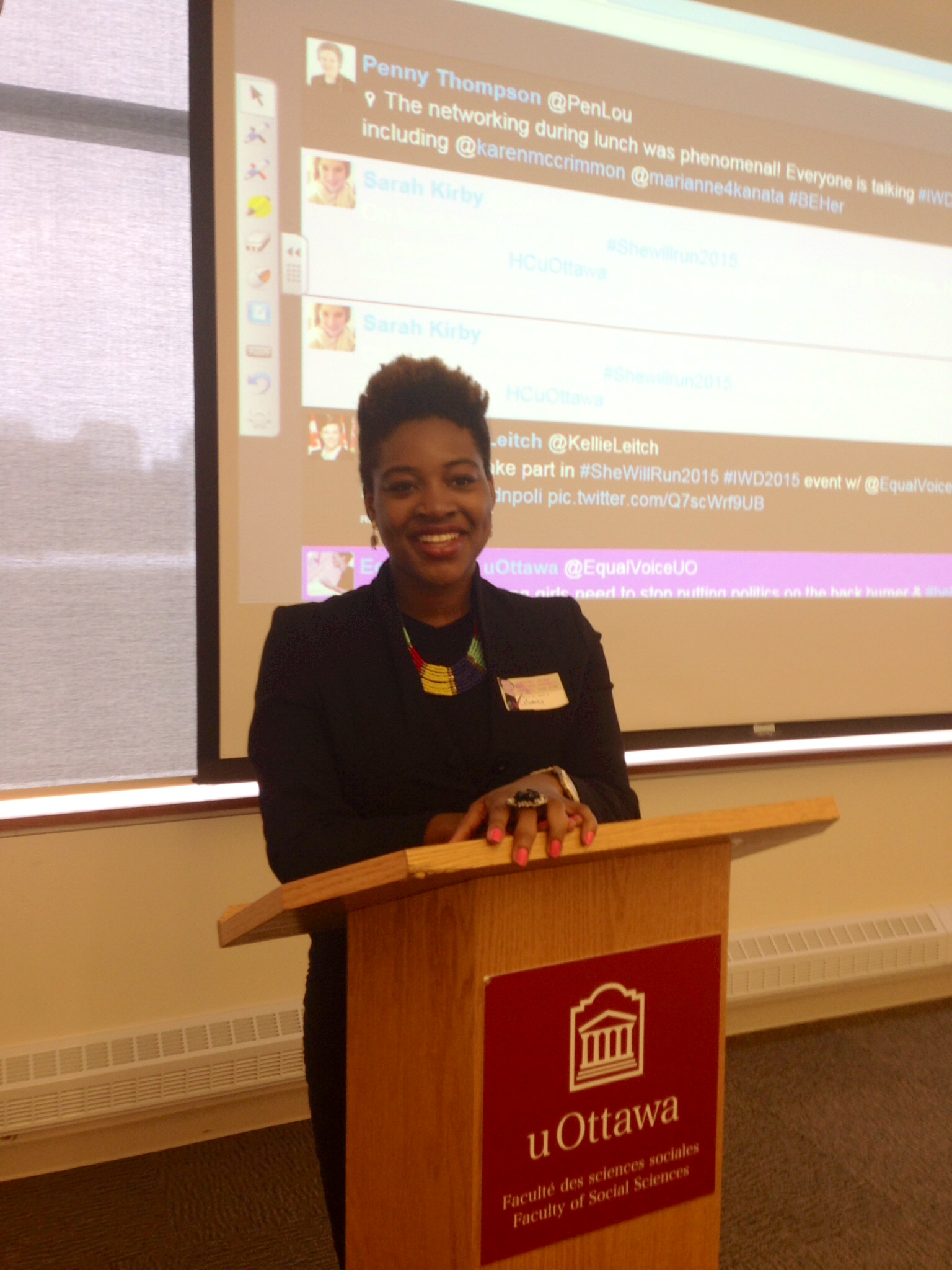
Host & Moderator of Equal Voice uOttawa’s She Will Run Conference 2015

photo-2

Chiamaka was invited by the University of Ottawa’s Equal Voice branch to host and moderate the team’s annual She Will Run conference. The event which was aimed at encouraging young women to develop interest in politics and consider running for office in the future, took place on March 7, 2015 and attracted about 50 people. Chiamaka moderated conversations between the audience and the guest speakers – two of whom are female politicians. The minister of labour and the status of women – Hon. Kellie Leitch, the president of the Ontario Liberal Women’s Commission – Lynne Steele and a candidate of the Green Party of Canada – Lorraine Rekmans were the guest speakers. In alignment with her personal mandates, Chiamaka’s role at the event was to be non-partisan and she had suggested the idea of having interactive sessions between the audience and these political figures.

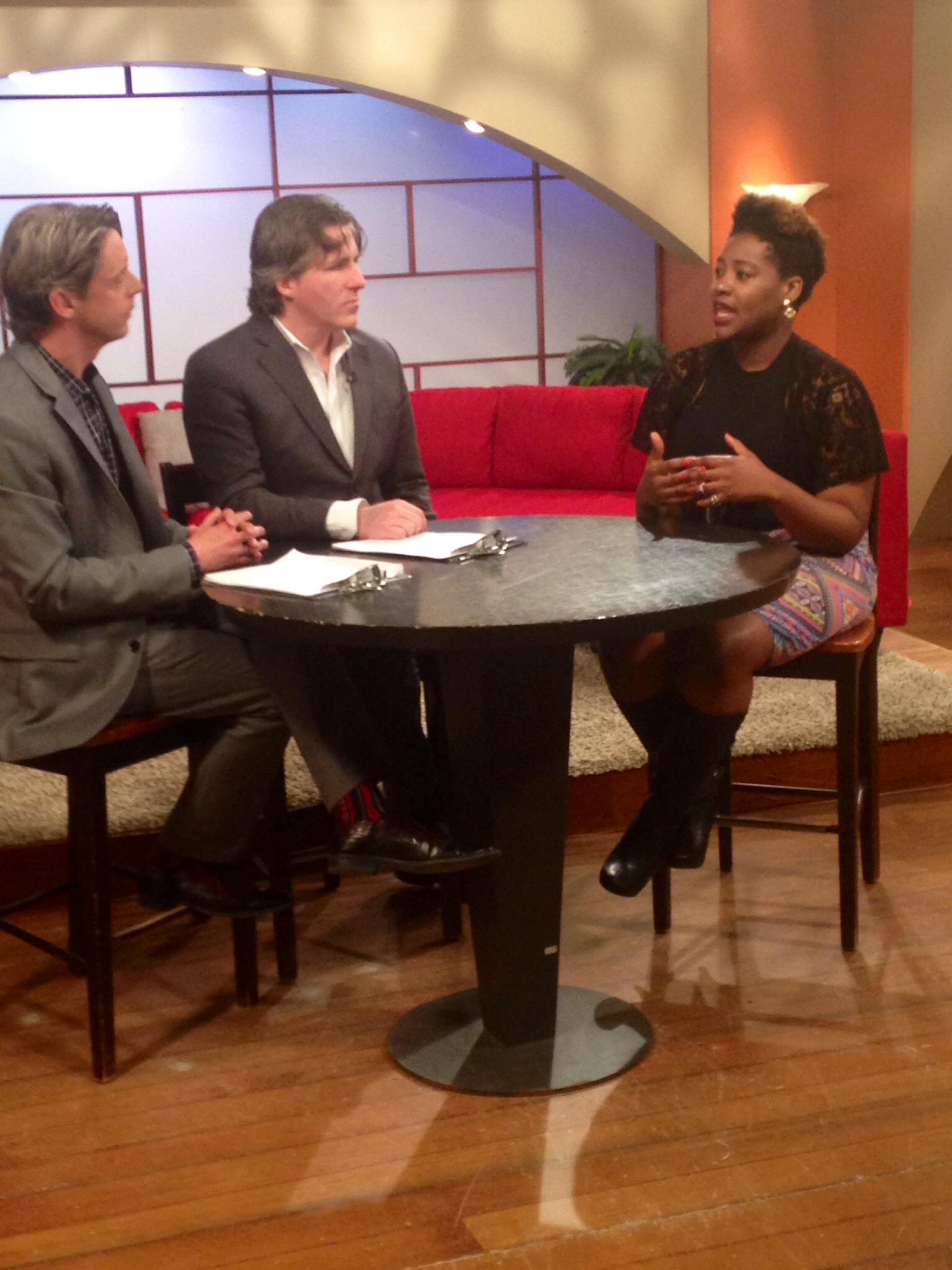
Guest Appearance on Daytime Ottawa (April 25, 2015)

photo-7

Chiamaka with hosts – Derick Fage (L) and Dylan Black (M)

Chiamaka was invited on one of Ottawa’s most renowned news shows – Daytime Ottawa, to speak on her passion for social justice and on current human rights violation issues. Chiamaka shed light on the  marginalization of Indigenous people in Canada and briefly touched on police brutality in the United States.

Standard
Uncategorized

Terrorists vs the educated: A tragic, growing trend

Very depressing news came out of Kenya, this week. On Thursday, islamic militants of the al-Shabaab group invaded Kenya’s Garissa University and killed 147 students – most of whom can be assumed were Christians, as the main targets of the attack were people of the Christian faith. Graphic photos have emerged from Thursday’s massacre and they are beyond heartbreaking.

The attack on Garissa University is a reminder that terrorists are scared of children and youths who possess a book and a pen. This is not the first time that news has emerged about terrorists attacking a school. Last year, in the Chibok village of Borno state (Nigeria), over 200 schoolgirls were abducted from their school. Malala Yousafzai was shot in an attempt to silence her calls for girls’ rights to education. Oh, and there was that time when a suicide bomber dressed as a student, killed 47 people at a secondary school in Yobe state, Nigeria. Malala Yousafzai stated that “One child, one teacher, one pen and one book can change the world.”. This is a fact and this reality makes terrorists very afraid.

Students go to school and learn about team work, love, the value of diversity and the importance of social justice. Terrorists coerce to differ on such tenets of education and would rather kill, try to divide the Christian from the Muslim, cause children to become orphans and cause youths with big dreams to be terrified. A young person who has access to books, a pen and a classroom is the greatest threat to a terrorist. So, the latter will try to silence youths and put fear in the hearts of many who want to change the world, you want to foster a world that gives no comfort to people with barbaric desires.

A recurring occurrence is that after every attack, after every threat to our freedoms, our resilience grows stronger – the message of love echoes louder around the world, the realization that education is so powerful that it makes terrorists scared causes people to jubilate and makes us raise the awareness even more. See, the good in humanity stays winning.

The world is filled with so much love and extreme levels of hate. Governments around the world need to put in place security measures that will ensure that the public is protected and stays safe, if unexpected attacks on their freedoms occur. There should be sound security and surveillance systems put in place. The defence departments and agencies must be adequately funded. So many are families are being put into mourning, several dreams of a bright future have been shot away, fear is being instilled in many youths who want to better their lives by getting an education. Governments have a role to play in reducing the death tolls amongst youths who are armed with nothing but knowledge, books and pens – overall, armed with a voice that can change the world.

My heart goes out to the families of the 147 students who lost their lives in the Garissa massacre. I am pained at this occurrence and I encourage world leaders to tighten their security and give terrorists no chance of coming in contact with the future leaders of our world.

May the victims’ souls rest in eternal peace.

Love,

Chiamaka.

If you like this post, CLICK HERE to subscribe

Standard
Uncategorized

Our First Time

Today is Election Day in Nigeria and I am aware that Nigerians are flooding polling stations amass to vote for who they want to lead us on for the next four years. I lived in Nigeria for 14 years, since I was born there and only for this election have I paid close attention to the public’s views and cared much about an election in Nigeria. Again, I was only a child while I was still living in Nigeria so as you can imagine Disney movies were more of a priority to me than observing arguments and reading well-thought-out articles with respect to an upcoming election. However, most times, the arguments and the newspaper headlines on elections, were sort of in my face and hardly avoidable. They would be centred on voting based on religious and cultural similarities.

I have followed the 2015 Election discussions for a while now and it is not what it used to be. Thanks to social media, for months and today, I have observed Nigerians’ zeal for whatever they think is change and for whomever they think will bring that change. I would go on social media and people were interested in the presidential debates, they were interested in the past successes and failures of the presidential candidates. What has been happening this time around is beautiful and I am in shock. A few years ago, not many cared so much about these. Religion, tribe and state, would determine who is well qualified to lead a nation that is undisputedly one of Africa’s greatest (both in population and economy size). Today, even displaced persons from Northern Nigeria are going out to cast their votes. The latter debunks a popular proposition by academics that people of low socioeconomic status do not vote. I am happily shocked at this development. Nigerians have been through a lot.

For decades, our resources have been looted by even our own people. In recent years, terrorism has nearly become synonymous with the nation. Several people are living in poverty in Nigeria. The insurgence of Boko Haram has made many become displaced persons and several have fled Nigeria as refugees. Soldiers are not well-equipped. Over 200 school girls were abducted last year and our nation could not save them. I was told Nigeria used to help other nations fight wars. So you see, Nigeria is in a state of concern. For years, we have treated the Presidential election process as an experiment and the consequences have been dire. So, I am surprised to see the nature of the debates among the public change but I understand why it would.

Today, Nigerians are making history. I have never seen the public so zealous for change for the good of all Nigerians. I stand proud of my people. We are so ready for change that I see it becoming a reality. Well done, Nigerians. Thank you for today. I hope that whoever wins this election will bring the change that we so desperately seek and need.

2014, leading up to this day, marks the the first time that age and maturity have let me pay very close attention towards a Presidential Election, in Nigeria. I am so glad that in the future, I can talk about this experience and say that my first time was very special.

Best of luck to Nigeria,

Chiamaka

If you like this post, CLICK HERE to subscribe!! 🙂

Standard
Uncategorized

Click! Click! Make Links

image

There are so many ideas you have and it is very easy for you to feel that your idea is best achievable by you alone. There is truth in that – only you, may be just enough to operate a company at the start, for example. However, when you start working towards your idea, you will need people to help you keep that idea moving. This is why you need to connect and align yourself with people who can light up one of your bulbs when you think it has died.

The people that you connect your ideas and works with are the ones who can push your dream further in the direction that you aim to keep it moving in. This help may come in the form of advice, collaborations or business transactions. Reach out to people who are in a similar field and who can relate with your work. You may not know it immediately but sooner or later you will find out how important it is to back yourself up with soul partners (sort of).

You may have been to an event, where, you are looking through the pamphlet when you find a page on the event sponsors. It’s interesting because most times, the trend is that the mandate of those sponsors align at least to some extent, with those of the event organizer. Making links! In connecting, you lift one another up. Still using the sponsorship example, the sponsor is easing the financial burden of a certain organization and in turn the latter, is advertising the sponsor’s brand.

Some months ago, I was enrolled in a social change and activism course. There was a lecture on the importance of activists making links with organizations and associations who are also passionate about social justice. With the lecture, was a very enlightening example on how some student protesters in Quebec were able to gain lots of solidarity and support from organizations because of the similar mandates they had.

It is important to connect with and stay connected with people who share a passion for your kinds of ideas and whom you feel you learn a lot from. It is a mutual relationship because you stimulate each other’s ideas and achievements.

Love,
Chiamaka

If you like this post, CLICK HERE to subscribe!! 🙂

Standard