Uncategorized

Broken systems and clipped wings

Broken systems exist in many societies and in my forms, whether it be systems that do not value racial and gender equality, systems that operate prison industrial complexes or whether it be systems that do not ameliorate the conditions of the poor. They are systems because the core of every society operates around a system – one run and implemented under a government. So, indeed governments can either produce or destroy a broken system because they control the system of governance.

Societies that operate under a broken system are unconsciously or consciously disadvantaged. This is because they are not maximizing the potential of most of the society- talents are left to rot in jail, the poor are left on the margins (having welfare packages in place does not necessarily empower people), racial discrimination etc. Broken systems turn endowed people into persons operating on clipped wings because they have the potential to succeed but there are systemic barriers holding them back.

ABC_kalief_browder_jt_150609_16x9_992

Kalief Browder (Photocredit: abc News) 

Kalief Browder, an American who recently committed suicide, was a victim of a broken system. He was arrested at age 16 in 2010, on the allegation that he had stolen a backpack – a crime he refuted to have been involved with. However, without a trial, he was jailed for three years and according to The New Yorker, Kalief was in in solitary confinement for two years. Browder was released from prison in the year 2013. During his time in prison, he became suicidal but none of his attempts at suicide were successful till June 6, 2015 – two years after he was released from prison. On that day in June, Kailef Browder hung himself and died. He was only 22. The story of Kalief Browder – from his imprisonment and till his death, is very chilling and indeed, angering because the circumstances that eventually led to his death could have been avoided. How can a 16-year-old child be imprisoned in solitary confinement? Why was there never a trial, no due process? Where was humanity in the law enforcement officials who had the ability to advocate for Browder’s rights?

That is what broken systems do. They clip wings, they do not enable people to fulfill their true potential, they hold people back from self-actualization.

Governments of developed and developing countries alike, need to create policies that ensure that all spheres of society are being represented justly and that empowerment is an underlying goal of most, if not all policies. Again, it is not enough to provide welfare services to the poor (though this is vital) and distribute food to the under-privileged during political campaigns. Rather, citizenry empowerment should be the goal of every government and the system of governance it operates within. Also, governments must make it a top objective to ensure that citizens’ rights are always a priority and ensure that only officials that align with such a mandate will retain their jobs. Who would imagine that a story like the Kalief Browder one would be coming out of a place like the United States?

Peace,

Chiamaka
If you like this post, CLICK HERE to subscribe!

Standard
Uncategorized

Forming in the present, shaping the future

History is of the past but not necessarily something that should be forgotten, unspoken of or left to wither away. History is the fabric of cultures and societies. It is accessible via story-telling, libraries, movies etc. History shapes the present and the future.

A week ago, together with some other social justice advocates, I was reflecting on the work of the Truth and Reconciliation Commission of Canada. I was thinking of ways that Canada could create a more respectful, just and inclusive society for the nation’s Aboriginal population who have long faced marginalization. In accordance with the theme of the conversation, I was asked what I thought reconciliation means with respect to Canada and Aboriginal peoples. So, I said: Reconciliation starts by recognizing the contributions that Aboriginal people have made to Canada and how there has also been a “cultural genocide” on Aboriginal peoples. In Canada, we do not talk about the issues. We talk about Canada being a multicultural and peaceful society but we do not talk about the issues. So, for reconciliation to happen – we must acknowledge the past, learn from it and develop ways to build a better present and future.

That is the summary of my contribution to the question asked. I also did allude to the fact that no matter how filthy the past has been, it has to be acknowledged and learned from not hidden. From articles I have read, conversations I have been engaged in, Aboriginal people in Canada want the racism that they and their ancestors have faced in the past to be recognized and they want a reconciliation. They want a better Canada that will not deny Aboriginal people of their human rights. To reconcile, Canadians have to see the issues in many treatments that were forcefully put upon Aboriginal people. Canadians have to see the issues with the past and realize that some actions of the present are merely but a less severe rendition of that past because Aboriginal people still live in disappointing economic and social conditions here in Canada.

I was born and raised in Nigeria but not until I left the country (for school) and certainly became more mature, did it begin to dawn on me that I did not know a lot about my history. Colonization swept away cultures and I ever since I realized that, I have made a conscious attempt to keep educating myself, to keep seeing value in what the colonizers may have deemed crude, to never cover up my identity, to never let anyone make me feel that my culture does not matter based on his/her ethnocentrism. History is shaping my strength, shaping my resistance and shaping my ability to encourage people from different cultures and nations, that they are good enough and their identity, accent and culture matters. If we dwell on imitation, we lose our identities and it becomes a loss to future generations.

History also gives people the ability to celebrate those who have shaped our present in a positive way – whether they are still living or no longer with us.

History forms from the present and is a vital reference for the future. Make a commitment to never let a part of your history (community, family history etc) die.

Love,

Chiamaka

If you like this post, CLICK HERE to subscribe!!:)

Standard
Uncategorized

Inequality on these streets

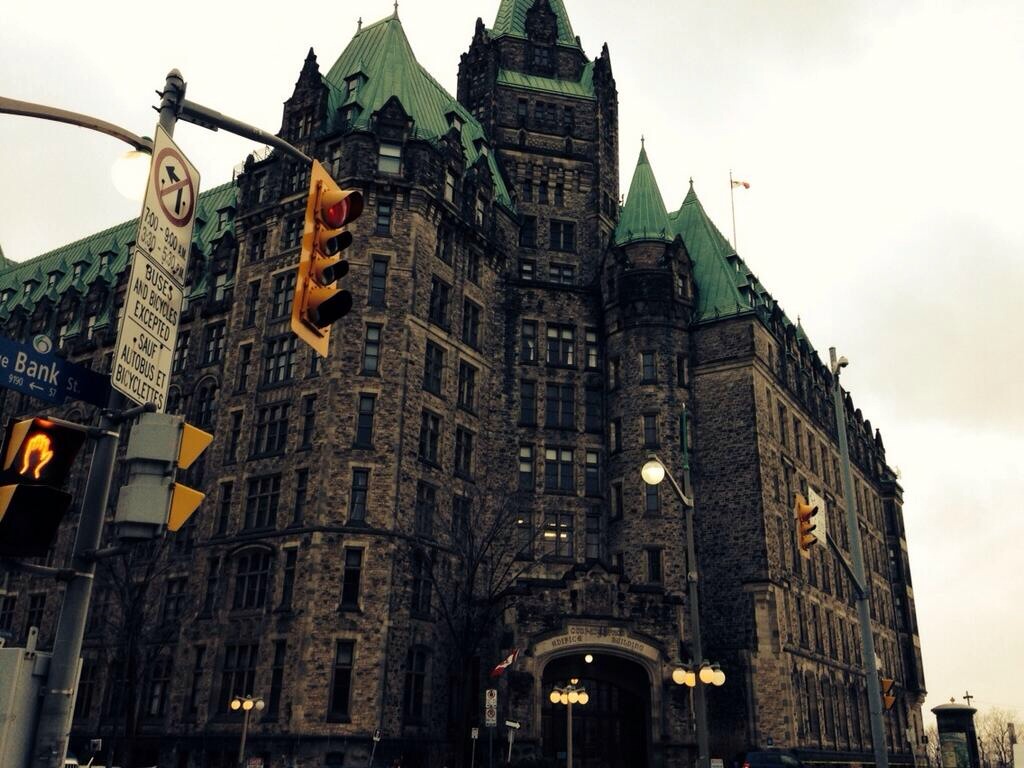
It is quite disturbing to notice the stark inequality that plays out between Rideau Street leading up to Parliament Hill. Observing the occurrences creates for me, a mental picture that perfectly depicts the rich who stay rich or keep getting richer versus the less fortunate who live in abject poverty. This picture is easily formed as you walk through Rideau street to Parliament Hill. If you walk on Rideau Street, you will journey through many needy citizens – some obviously under the influence of hard substance and some homeless, before you walk on further to Parliament Hill.

photo-9

This perfect picture of inequality (not the one above) is sad and unfortunate and the question that comes to mind is simply – Why?

Why is it that just across the road from the Hill where the people’s representatives debate and make laws, there is a street full of a people in desperate need for grace, for amelioration. Why?

Someone once told me that there had been an attempt to keep such under-privileged individuals away from the streets but then it seemed as though society was hiding it’s flaws and thus, not being honest. So, I guess that did not work out.

However, the dilemma here is not about hiding these people. No society is perfect and it is in accordance with democracy that flaws be made known, that representation of members of the society not be selective. The dilemma is in the sharp contrast between the occurrences on Rideau Street and those that take place on Parliament Hill, just walking distance away. This calls for concern as to what is being done to empower the vulnerable.

How is it that on one side of the road, there are people making thousands of dollars and on the other side, people are cheerful for just a two-dollar coin. The picture this paints is unimpressively perfect. It denotes the class struggle that is so commonly talked about across societies and which is possibly inevitably taught in political science classes. It is striking to the mind and shakes it. It spurs worry. I often wonder if the case with downtown Ottawa is as a result of the elected officials not doing enough … or then what? I find it hard to even accept the possibility that maybe ‘they’ just don’t really care. I may resist the urge to make that conclusion but this picture of inequality that comes to mind when I reminisce on my walks on Rideau Street and the surrounding area, begs for that particular conclusion to be the most attractive.

This picture is not an illusion. It is a reality. If you walk through Rideau Street, whether by day or by night, you will see a significant number of less fortunate people, some begging, some being loud, some just watching. Then, if you walk up to Parliament Hill, using Rideau Street as a sort of connection, the difference is clear. Still I ask – why? I do not know the answer to that but a suggestion to this predicament is the need for empowerment and engaging the less privileged in ways that will make them beneficial to themselves and to the society at large.

What are some inequality issues that you have observed in your own society? Please comment below.

Peace,

Chiamaka

If you like this post, CLICK HERE to subscribe!!:)

Standard