Uncategorized

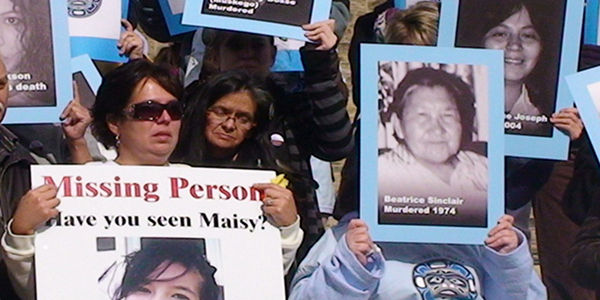
How many Stolen Sisters?

641960-1412350076-wide

Photo retrieved from: http://www.thepetitionsite.com/takeaction/641/960/179/

A year ago, the Royal Canadian Mounted Police (RCMP) released a report which states that between 1980 and 2012, there had been 1181 missing and murdered Aboriginal women. According to the report, a striking majority (1017) of the women in that category were murdered. The numbers continue to rise. Last year, 15 year old Tina Fontaine’s body was found in the Red River. The body had been wrapped in a plastic bag before it was dumped. In November of that same year (2014), Rinelle Harper was sexually assaulted, beaten and dumped in the Assiniboine River. Harper survived.

The indignity in the way Indigenous women in Canada are treated did not start just recently. Colonization was the genesis of these atrocities. Indigenous people were the first on Canadian soil but they began to face marginalization, violence and colonization when European settlers started to emerge. Indigenous women were seen to be of little or no worth, they were sexually assaulted and used for labour. Patriachy was infused into the Indigenous culture as a result of the Christian, European homogenization of the society that was taking place at that time of colonization in Canada. There was the establishment of the residential school system by the government in the 19th century, in an attempt to cleanse Aboriginal children of their culture and enable them assimilate into the mainstream culture. Children were forcefully taken to residential schools where they were not allowed to speak their language and lots of sexual, physical and emotional abuse went on in these schools. The residential school system ended in 1996 – not a long time ago.

That little summary of the impacts that colonization in Canada has had on Indigenous peoples gives an insight to why Indigenous women are treated with so much disrespect and inhumanity. There is a history. A history that deemed Indigenous peoples as uncivilized, a history that dumped patriarchy into their culture (this may also explain why many Indigenous women experience spousal abuse), a history that isolated children from their families into an educational system of abuse – a psychological cycle that may be passed to generations. Indigenous women till this day are at the receiving end of all these so-called ‘past’ misconceptions and mistreatment of Indigenous persons.

I have been in the middle on conversations on Aboriginal issues where someone will chip in and state sympathetically that their culture is the main issue. So you see, the effects of colonization can stick like hard glue. The culture of Indigenous people is not the problem and it is unfair to say so. Rather, the problem is that Natives have long been forced to assimilate into the dominant culture and their commitment to the culture of their ancestors has resulted in dire consequences such as the susceptibility of the women to sexual assault and murder.

The eye-opening RCMP report which was mentioned earlier, focused on the year 1980 through to 2012. Before 1980, such issues were already taking place. In 1971, Helen Betty Osborne was sexually assaulted and murdered for refusing to follow a group of men to party. In 2014, there were the cases of Fontaine and Harper. So Canada, how many more Stolen Sisters before we get our act together? How many more Stolen Sisters before the government of the day takes action to reduce the proneness of Indigenous women to violence?

Peace,

Chiamaka

If you like this post, CLICK HERE to subscribe

Standard
Uncategorized

Interview with Jamie Kwong – Director at the ORCC and business leader

photo-6

Photo Credit: Claude Brazeau, MPA www.brazeauphoto.com

Born in Brampton, Ontario, Jamie Kwong moved to Ottawa 11 years ago and has taken the city by storm. She is a director with the Ottawa Rape Crisis Centre (ORCC). Kwong is the executive director of the Quartier Vanier business improvement association (BIA). She was formerly the executive director of the Orléans Chamber of Commerce. Jamie Kwong is a great fit for the mandates of this blog because as you will notice from the interview, she is passionate about social justice and using enterprise as a means to give back to the community. On April 12, I sat down with Kwong for an interview and she shared lots from her wealth of experience:

On her attractiveness for the business positions that she has headed 

Prior to that, I was at the sexual assault centre (SASC) doing their fundraising and some support work. I was there for a couple of years as a volunteer. I started doing more events there and then, connecting with local city politicians and I kind of realized that’s what I really like to do and make change at that city level. I like to promote really amazing things in Ottawa and so, an opportunity became available at the Orléans Chamber of Commerce. I knew no one there, I didn’t even know what the Chamber of Commerce did. I applied, I got the job, I moved and I met a whole host of people. 120,000 people in that community itself. In my work there, I got to work with small business owners and I also worked with city politicians, provincial politicians and federal (politicians). You really start to see the synergy between the importance of supporting your local business community – they are the ones that donate back to charities, they are the ones that donate back to various initiatives in the community and they also make use of those things in the community. So, its very cyclical and it’s a symbiotic relationship. I really fell in love with that community. After 3 years, I’m like – I want to try something different, I want to try more advocacy – so promoting what would be beneficial for that community and that could be anything from promoting transportation needs we need, to bringing in types of businesses that would help make our community more diverse. I signed a lease for an apartment in New Edinburgh and the job for Quartier Vanier came up. It’s more streamlined, so focusing on making three streets really attractive – Beechwood, Montreal Road, McAurthur.

On her sexual violence support work

The last year and a half, I have been volunteering at the Ottawa Rape Crisis Centre (ORCC), so there is a lot of overlap between the sexual assault centre and the Ottawa Rape Crisis Centre. It (the Ottawa Rape Crisis Centre) is the third sexual assault centre that opened in Canada, so they just celebrated their 40th anniversary. For the last six years, I have been working in violence against women, I meet amazing people and it’s funny, people have interesting misperceptions on the work and even of rape culture, in general and myth that I love to raise awareness on it. When I was working as a support worker, I met people that had gone through some of the most horrific things you can hear of and they are sitting in front of you, they are full of love, full of compassion, they wanna help people, they wanna just be heard and believed and supported.

Describing Ottawa with regards to sexual violence 

Ottawa, in general, is a safe city. One statistic that I want to get out there is that Ottawa is known as the city that is safest for women. Anecdotally and through our own statistics and I am not going to even say that I am an expert on stats, but sexual violence is still a major issue here. What stops women from feeling safe to come forward and reporting is sometimes, they’re put on the position of defending themselves. We also have other things that we are looking into at the ORCC – what kind of things can we do as sexual assault centres and the police to make it easier for women to report. So, I know that there are some initiatives that are coming forward. We are trying to push forward on models that other cities have used, that have been very effective in getting more women to report. One is the Philadelphia model thats built into their system, where the police work hand-in-hand with front-line workers. Women feel much safer coming forward.

There is a conception that women are not easily believed when they report rape. Thoughts?

In my work as a support worker at SASC, I found that the number one thing is that people do not automatically see why they need to report and nor is it any woman’s responsibility. They need to take care of themselves, so they need to do what’s best for themselves. So, often times, people are like, “Oh you should report”. Women make the best decisions for what they need and so, the most dangerous time for women is when they are living in abusive situations. So, they know these things. Sometimes, they need to take it step-by-step, according to what they feel they need. Often times, if they report right away, that is the very very last case kind of situation. We get a lot of women who waited 20 years – had their children grow up or other things factored in and then, finally get time to themselves. 20 years later, all this stuff is coming is coming up. It’s called triggers.
Advice for anyone who has been a victim of rape and is wondering – “What do I do?” 
There’s a lot of victim blaming out there. What I would say to anyone who has experienced it is – It wasn’t your fault, what do you need right now – ask yourself that. Here are some three resources that might be of help to you: CALACS (for Francophones), SASC and then there’s ORCC.

You can contact Jamie Kwong via Twitter, LinkedIn and/or Facebook! Also, check out this upcoming fundraising event, for the ORCC: http://www.orcc.net/orcc-4th-annual-spin-thon

If you like this post, CLICK HERE to subscribe!! 🙂

Standard
Uncategorized

In the public’s eyes …

Chiamaka and Blurred Creations are getting noticed!

Host & Moderator of Equal Voice uOttawa’s She Will Run Conference 2015

photo-2

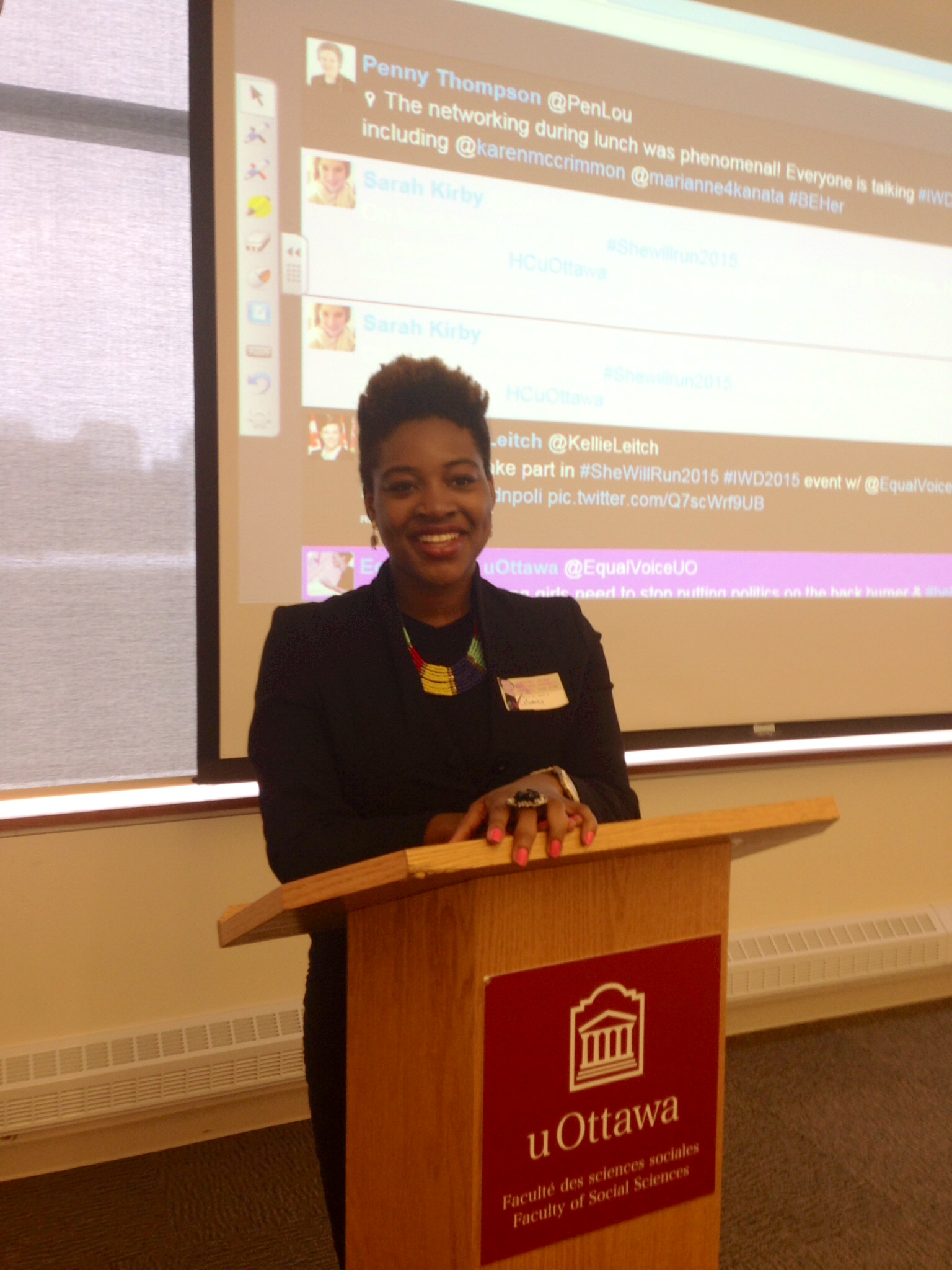
Chiamaka was invited by the University of Ottawa’s Equal Voice branch to host and moderate the team’s annual She Will Run conference. The event which was aimed at encouraging young women to develop interest in politics and consider running for office in the future, took place on March 7, 2015 and attracted about 50 people. Chiamaka moderated conversations between the audience and the guest speakers – two of whom are female politicians. The minister of labour and the status of women – Hon. Kellie Leitch, the president of the Ontario Liberal Women’s Commission – Lynne Steele and a candidate of the Green Party of Canada – Lorraine Rekmans were the guest speakers. In alignment with her personal mandates, Chiamaka’s role at the event was to be non-partisan and she had suggested the idea of having interactive sessions between the audience and these political figures.

Guest Appearance on Daytime Ottawa (April 25, 2015)

photo-7

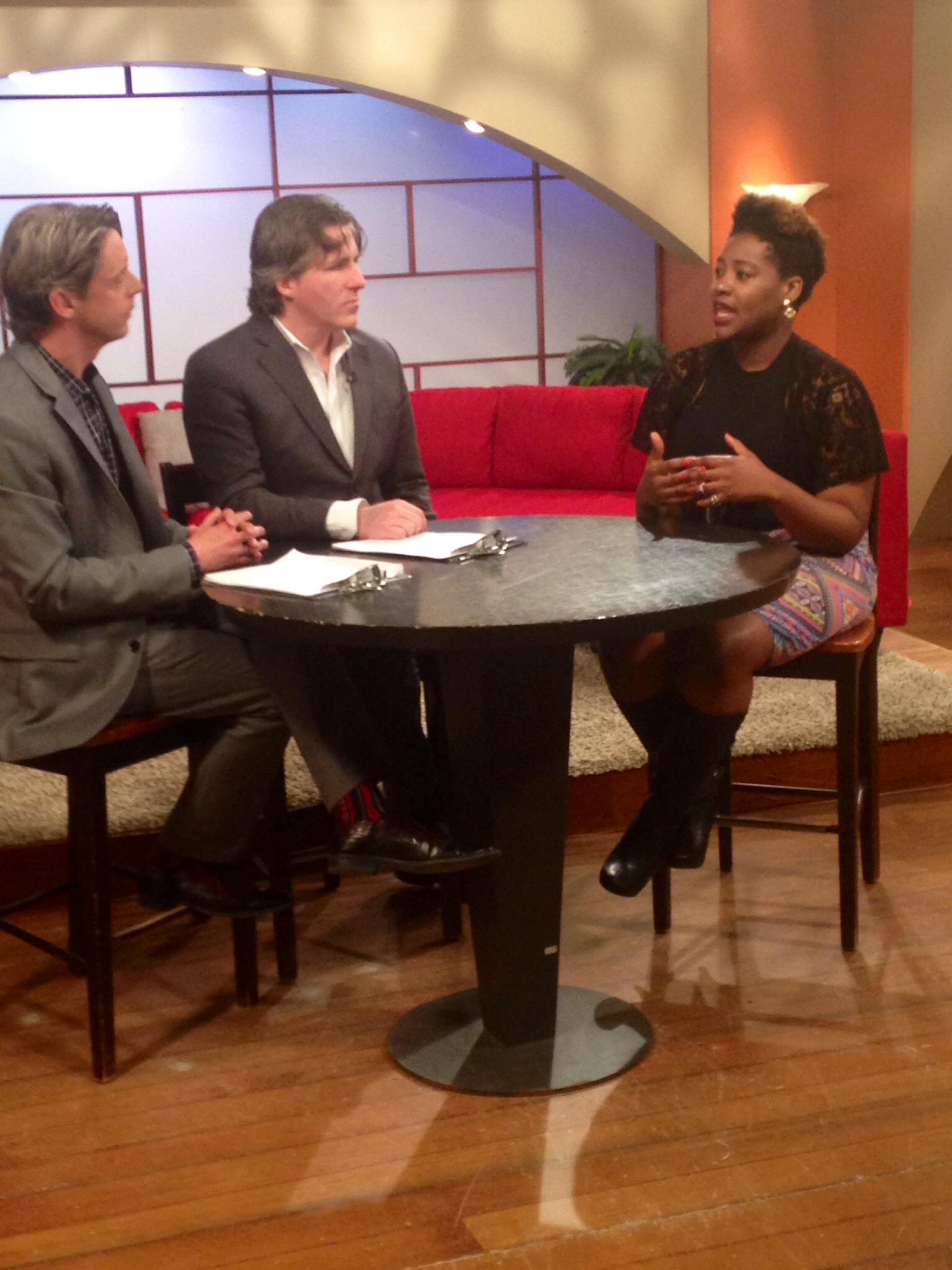
Chiamaka with hosts – Derick Fage (L) and Dylan Black (M)

Chiamaka was invited on one of Ottawa’s most renowned news shows – Daytime Ottawa, to speak on her passion for social justice and on current human rights violation issues. Chiamaka shed light on the  marginalization of Indigenous people in Canada and briefly touched on police brutality in the United States.

Standard
Uncategorized

Terrorists vs the educated: A tragic, growing trend

Very depressing news came out of Kenya, this week. On Thursday, islamic militants of the al-Shabaab group invaded Kenya’s Garissa University and killed 147 students – most of whom can be assumed were Christians, as the main targets of the attack were people of the Christian faith. Graphic photos have emerged from Thursday’s massacre and they are beyond heartbreaking.

The attack on Garissa University is a reminder that terrorists are scared of children and youths who possess a book and a pen. This is not the first time that news has emerged about terrorists attacking a school. Last year, in the Chibok village of Borno state (Nigeria), over 200 schoolgirls were abducted from their school. Malala Yousafzai was shot in an attempt to silence her calls for girls’ rights to education. Oh, and there was that time when a suicide bomber dressed as a student, killed 47 people at a secondary school in Yobe state, Nigeria. Malala Yousafzai stated that “One child, one teacher, one pen and one book can change the world.”. This is a fact and this reality makes terrorists very afraid.

Students go to school and learn about team work, love, the value of diversity and the importance of social justice. Terrorists coerce to differ on such tenets of education and would rather kill, try to divide the Christian from the Muslim, cause children to become orphans and cause youths with big dreams to be terrified. A young person who has access to books, a pen and a classroom is the greatest threat to a terrorist. So, the latter will try to silence youths and put fear in the hearts of many who want to change the world, you want to foster a world that gives no comfort to people with barbaric desires.

A recurring occurrence is that after every attack, after every threat to our freedoms, our resilience grows stronger – the message of love echoes louder around the world, the realization that education is so powerful that it makes terrorists scared causes people to jubilate and makes us raise the awareness even more. See, the good in humanity stays winning.

The world is filled with so much love and extreme levels of hate. Governments around the world need to put in place security measures that will ensure that the public is protected and stays safe, if unexpected attacks on their freedoms occur. There should be sound security and surveillance systems put in place. The defence departments and agencies must be adequately funded. So many are families are being put into mourning, several dreams of a bright future have been shot away, fear is being instilled in many youths who want to better their lives by getting an education. Governments have a role to play in reducing the death tolls amongst youths who are armed with nothing but knowledge, books and pens – overall, armed with a voice that can change the world.

My heart goes out to the families of the 147 students who lost their lives in the Garissa massacre. I am pained at this occurrence and I encourage world leaders to tighten their security and give terrorists no chance of coming in contact with the future leaders of our world.

May the victims’ souls rest in eternal peace.

Love,

Chiamaka.

If you like this post, CLICK HERE to subscribe

Standard